Adaptive Resistance: Beyond The Barbell
Unlocking Advanced Progressive Overload with Bands, Chains, and The Science of Variable Resistance.
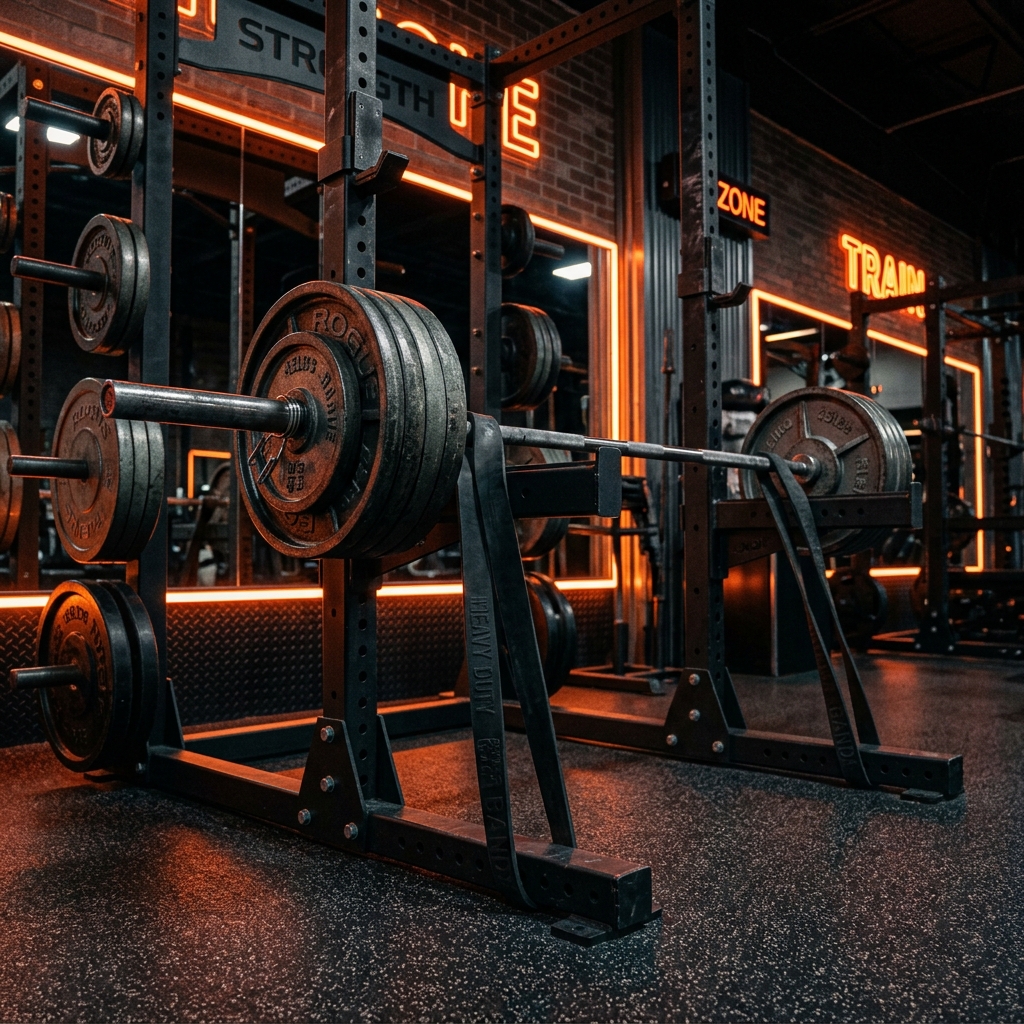
In the intricate science of strength and **hypertrophy**, the bedrock principle has always been **progressive overload**. For decades, the barbell, dumbbell, and machine have been the primary tools in our arsenal, allowing us to incrementally increase weight, reps, or sets. However, the human body is an exquisitely adaptive organism, and to continuously stimulate growth and strength gains, we must evolve our methods. Enter the realm of **adaptive resistance**, a sophisticated approach that transcends the limitations of static loads, ushering in a new era of advanced **progressive overload** through the intelligent application of bands and chains. As Dr. Kaelen Thorne, a proponent of biomechanically informed training, elucidates, understanding and implementing variable resistance is not merely a training hack; it is a fundamental re-evaluation of how we interact with force, leverage, and our inherent **strength curves**.
This article delves deep into the physiological rationale, practical applications, and nuanced programming strategies behind variable resistance training, equipping you with the scientific framework to unlock unprecedented gains. We will explore how elastic bands and gravity-dependent chains manipulate the resistance profile across an exercise’s **range of motion**, thereby optimizing **mechanical tension** and neuromuscular recruitment—two indispensable drivers of muscular adaptation. Prepare to move beyond the conventional and embrace a more dynamic, physiologically attuned approach to unlocking your ultimate physical potential.
The Foundational Imperative: Reimagining Progressive Overload
At its core, **progressive overload** dictates that for muscles to grow stronger and larger, they must be continually challenged with a stimulus greater than what they have previously encountered. This typically manifests as adding weight to the bar, increasing repetitions, performing more sets, or decreasing rest times. While undeniably effective, particularly for beginners and intermediates, traditional free weights present a significant biomechanical limitation: their load is constant throughout the entire movement. This is where the concept of the **strength curve** becomes critical.
Most compound movements exhibit an ascending or descending **strength curve**. An ascending curve, common in exercises like the barbell squat or bench press, means we are strongest at the top (lockout) portion of the lift and weakest at the bottom (stretched) position. Conversely, a descending curve, often seen in exercises like the dumbbell lateral raise, means we are strongest at the bottom and weakest at the top. The disconnect between a static load and a varying **strength curve** often leads to "sticking points"—points in the **range of motion** where the muscle's leverage is poorest, thus limiting the total load that can be lifted. This means the muscle is insufficiently challenged in its strongest positions, leaving significant adaptive potential on the table.
"The static nature of free weight resistance often means we are under-challenging the muscle in its most mechanically advantageous positions. Adaptive resistance allows us to match the resistance profile to the inherent strength curve, maximizing tension throughout the entire concentric phase."
Variable Resistance: The Science of Dynamic Tension
**Variable resistance** training directly addresses the aforementioned limitations by dynamically altering the resistance applied to the muscle during the movement. This is achieved primarily through the strategic integration of elastic bands and heavy chains. The objective is to provide greater resistance in the stronger portions of the lift and lesser resistance in the weaker, more vulnerable positions, thereby creating a more uniform tension stimulus across the entire **range of motion**. This uniform tension is paramount for optimizing **mechanical tension**, which Dr. Mike Israetel, co-founder of Renaissance Periodization, frequently highlights as the primary driver for muscle **hypertrophy** when discussing training principles.
Physiologically, this translates to several key advantages:
- Optimized Mechanical Tension: By increasing resistance where the muscle is strongest, we ensure that muscle fibers are under maximal **mechanical tension** for a greater percentage of the lift, stimulating a more robust anabolic response, including activation of the **mTOR pathway**.
- Enhanced Motor Unit Recruitment: The need to generate increasing force against escalating resistance recruits a greater number of high-threshold motor units, which are typically associated with fast-twitch muscle fibers possessing the greatest growth potential.
- Improved Rate of Force Development (RFD): The requirement to accelerate against increasing resistance throughout the concentric phase can enhance explosive power, a crucial adaptation for athletes.
- Accommodating Resistance: The term itself suggests the resistance "accommodates" the user's **strength curve**, ensuring maximal effort from start to finish.
Bands: Elasticity and Explosiveness
Resistance bands, often made from layered latex, provide an ascending resistance profile. As the band stretches, the tension it applies increases. This makes them exceptionally well-suited for exercises with an ascending **strength curve**, such as the squat, bench press, and overhead press. When attached to a barbell, bands ensure that the initial, weaker portion of the lift has lighter resistance, which progressively increases as you near lockout—where you are strongest. This overloads the top range, promoting greater concentric acceleration.
Consider the barbell squat: the deepest position is typically the most challenging. As you ascend, leverage improves, and the lift becomes easier. By attaching bands, the resistance is lowest at the bottom and highest at the top, perfectly matching your natural **strength curve**. Reputable brands like **Rogue Fitness** offer a comprehensive range of Monster Bands, from mini-bands to medium and heavy bands, providing a spectrum of resistance suitable for various lifts and strength levels. Similarly, **EliteFTS** Pro Resistance Bands are another industry standard, known for their durability and consistent tension.
As Jeff Nippard, a renowned coach and science communicator, details in his comprehensive guides, optimizing squat mechanics involves understanding how resistance impacts technique. Incorporating bands can refine proprioception, forcing the lifter to maintain optimal bracing and tension throughout the entire movement.
Beyond barbell integration, bands are invaluable for standalone exercises, offering unique stimuli. Exercises like band pull-aparts for shoulder health, banded glute bridges, or monster walks utilizing smaller bands like the **TheraBand CLX** provide effective tension and can serve as excellent warm-ups, activation drills, or finishers. Their portability also makes them indispensable for travel, allowing for high-quality workouts without access to heavy equipment.
Chains: Gravity-Dependent Progressive Overload
Chains offer a distinct form of **variable resistance**, one that is purely gravity-dependent. When draped over a barbell, fewer chain links are on the floor in the bottom position of a lift, meaning less total weight is being lifted. As the bar ascends, more links lift off the floor, progressively increasing the total load. This perfectly mimics an ascending **strength curve**, providing maximal resistance where the lifter is strongest—at the top of the movement.
The kinetic feedback from chains is unique. The swaying and clanking provide an audible and tactile cue that can enhance focus and control. The demand for stability is also heightened, as the dynamic nature of the chains can slightly shift the center of gravity, engaging stabilizer muscles to a greater extent. Chains are particularly effective for strength athletes focusing on powerlifting movements. Brands like **Rogue Fitness** and **Titan Fitness** offer excellent plate-loaded chain sets, allowing for precise adjustments of overall load.
For deadlifts, chains are a powerful tool to overcome the lockout sticking point. As Jeff Nippard explains in his detailed deadlift breakdown, the top portion of the lift often requires specific strength. Chains ensure that the eccentric phase also benefits from a variable load, reducing the total weight as the bar descends, which can be advantageous for managing fatigue and allowing for more controlled eccentrics in the stretched positions.
Moreover, chains aren't limited to barbells. Weighted chain vests from manufacturers like **Xvest** or even custom setups can be used for bodyweight exercises such as pull-ups or dips, adding a unique, dynamic form of **progressive overload** that shifts throughout the movement.
Mechanisms of Enhanced Adaptation: A Deeper Dive
The profound impact of **variable resistance** on muscle growth and strength stems from its ability to optimize the key physiological drivers of adaptation:
Mechanical Tension: The Anabolic Signal
As widely emphasized by researchers like Dr. Brad Schoenfeld and experts such as Dr. Mike Israetel, **mechanical tension** is the primary stimulus for **hypertrophy**. It refers to the force applied to muscle fibers, which then translates into cellular signaling cascades that promote protein synthesis. With traditional static loads, muscles experience significant tension only at specific points in the **range of motion**. Variable resistance, by accommodating the **strength curve**, ensures that muscle fibers are under maximal or near-maximal tension for a greater duration and across a broader portion of the movement. This prolonged, intense tension significantly amplifies the anabolic signal, including the activation of pathways like the **mTOR pathway**, which is critical for muscle protein synthesis.
Neuromuscular Adaptation and Rate Coding
The dynamic nature of variable resistance demands a higher degree of neuromuscular coordination. To generate increasing force against escalating resistance, the nervous system must efficiently recruit and synchronize motor units. This leads to improved **rate coding** (the frequency at which motor units are fired) and enhanced intermuscular coordination, making the nervous system more efficient at generating force. Over time, this translates to improved peak force production, faster **rate of force development**, and greater control over complex movements. This kind of advanced neural drive is particularly beneficial for athletes seeking to improve power and explosiveness.
Metabolic Stress and Time Under Tension
While **mechanical tension** is king, **metabolic stress** also plays a supporting role in **hypertrophy**. By maintaining a higher level of tension throughout the movement, variable resistance often results in longer effective **time under tension**. This can lead to increased accumulation of metabolic byproducts (e.g., lactate, hydrogen ions), cell swelling (the "pump"), and potentially a more significant activation of satellite cells. Though not the primary driver, this secondary mechanism contributes to a comprehensive hypertrophic stimulus.
Advanced Programming and Periodization Strategies
Integrating variable resistance effectively requires thoughtful programming. It's not about simply adding bands or chains; it's about understanding when and how to deploy them for maximal benefit within a periodized structure.
Strategic Integration
- Strength Blocks: For powerlifters or strength athletes, incorporating bands or chains during strength blocks can help overcome sticking points and enhance lockout strength. A common approach is to use them for 2-4 week cycles, followed by a block of pure straight-weight training.
- Hypertrophy Phases: For bodybuilders, variable resistance can amplify **mechanical tension** and **time under tension**, driving greater muscle growth. It can be used as a primary movement or as an accessory, depending on the focus.
- Deloads/Active Recovery: Lighter bands can be used during deload weeks to maintain neurological efficiency with reduced overall joint stress. As Dr. Andrew Huberman explains when discussing fatigue and recovery, strategically manipulating training variables can aid recuperation.
Sample Adaptive Resistance Protocol (Intermediate Lifter)
| Exercise | Sets | Reps | Variable Resistance Type | Notes |
|---|---|---|---|---|
| Barbell Back Squat | 3-4 | 5-8 | Heavy Bands (e.g., Rogue Monster Band - Medium) | Focus on explosive concentric, controlled eccentric. |
| Barbell Bench Press | 3-4 | 6-10 | Medium Bands (e.g., EliteFTS Pro Resistance Band - Average) | Maintain strict form, avoid lockout "bounce." |
| Barbell Deadlift | 3 | 3-5 | Chains (e.g., Titan Fitness 5/8" Chain Set) | Emphasize a strong lockout, control descent. |
| Overhead Press | 3 | 8-12 | Light Bands (e.g., Rogue Monster Band - Mini) | Use a reliable power rack for safety. |
| Banded Pull-Aparts | 3 | 15-20 | Light Loop Band (e.g., TheraBand CLX) | Warm-up or finisher for shoulder health. |
Remember to adjust the band/chain tension and base barbell weight to ensure the total load falls within your desired intensity range for the given rep scheme. This might require some experimentation, but the investment in finding the right balance will yield significant dividends.
Gear Recommendations and Practical Considerations
To embark on your adaptive resistance journey, quality equipment is paramount. Investing in robust, reliable gear will ensure safety and efficacy.
- Resistance Bands: For barbell work, **Rogue Fitness Monster Bands** (available in various thicknesses) and **EliteFTS Pro Resistance Bands** are top-tier choices due to their consistent tension and durability. For accessory work or pre-hab, smaller loop bands like **TheraBand CLX** or **Perform Better Mini Bands** are excellent.
- Chains: **Rogue Fitness Plate-Loaded Chain Sets** or **Titan Fitness Chain Sets** are industry standards. Ensure the chains have collars or carabiners for secure attachment to your barbell.
- Barbells & Racks: A high-quality barbell, such as the **Rogue Ohio Bar** or an **Eleiko Powerlifting Bar**, paired with a sturdy power rack like the **Rogue R-3 Power Rack** or **REP Fitness PR-4000**, is essential for safety and optimal performance when using variable resistance.
- Footwear: Stable footwear is crucial. **Nike Romaleos**, **Adidas Adipower**, or **Reebok Legacy Lifter** weightlifting shoes provide a solid, elevated heel platform, aiding squat depth and stability. For more general training, **Nike Metcon** or **Reebok Nano** offer excellent versatility.
- Apparel: While not directly impacting lifting mechanics, comfortable and performance-oriented apparel from brands like **Gymshark**, **Lululemon**, or **Under Armour** can enhance focus and movement freedom.
- Supplements: While not directly tied to variable resistance, foundational supplements support overall performance and recovery. Consider **Optimum Nutrition Gold Standard Whey Protein** for post-workout recovery, **Creatine Monohydrate** (e.g., from **Myprotein** or **BulkSupplements.com**) for strength and power, and a transparent pre-workout like **Kaged Muscle Pre-Kaged** for enhanced focus and energy. As Dr. Layne Norton eloquently explains, nutrition, including caloric balance and adequate protein intake, forms the bedrock of any successful training regimen.
Potential Pitfalls and Best Practices
While highly effective, adaptive resistance training requires diligence and an understanding of potential pitfalls:
- Technique Over Load: Never compromise form for added resistance. The dynamic nature of bands and chains can exacerbate poor mechanics. Refer to experts like Jeff Cavaliere from Athlean-X for nuanced technique insights.
- Progressive, Not Excessive: Incrementally increase band tension or chain weight. Do not jump to maximal loads too quickly. The goal is consistent, sustainable **progressive overload**.
- Setup Safety: Ensure bands are securely anchored and chains are properly draped to prevent slippage or injury. A power rack with safety pins is always recommended.
- Listen to Your Body: The novel stimulus can induce greater muscle soreness initially. Prioritize recovery protocols, including adequate sleep, nutrition, and active recovery techniques as advocated by Dr. Andrew Huberman.
Conclusion: The Future of Strength and Hypertrophy
**Adaptive resistance**, through the sophisticated application of bands and chains, represents a significant evolution in our understanding and execution of **progressive overload**. By dynamically matching the resistance profile to the body's natural **strength curves**, we unlock unparalleled opportunities for optimizing **mechanical tension**, enhancing neuromuscular adaptations, and driving consistent gains in strength and **hypertrophy**.
Moving beyond the barbell's static limitations is not an abandonment of traditional methods but a scientifically informed augmentation. For those committed to pushing their physical boundaries, for athletes seeking a distinct edge, and for individuals passionate about maximizing their **hypertrophy** potential, embracing variable resistance is an indispensable next step. Equip yourself with the knowledge, the right tools, and the dedication, and prepare to shatter plateaus that once seemed insurmountable. The future of advanced training is adaptive, and it awaits your command.