Is a Gym Membership Worth It?
A No-Nonsense Guide to Fitness ROI
It’s a question that cross-examines every training enthusiast eventually: Is a gym membership actually worth the monthly investment? In an era of online fitness plans, adjustable dumbbells, and high-intensity home workouts, paying to sweat in a dedicated facility might seem optional. But when you look at the raw mechanics of physical progression, human biomechanics, and performance psychology, the equation shifts dramatically. For the serious athlete or anyone focused on longevity, a premium facility is not an expense—it is a critical performance asset.
Let’s break down the return on investment (ROI) of a premium training membership, analyzing the science, economics, and psychological factors that home training simply cannot replicate.
1. The Biomechanical Deficit of Home Workouts
While bodyweight exercises, resistance bands, and a pair of basic dumbbells are fine for general cardiovascular conditioning or basic activity, they fail to supply the mechanical tension required for significant strength development or muscular hypertrophy. Muscle growth is dictated by the principle of progressive overload—consistently challenging muscle fibers with increased load, volume, and varying angles over time.
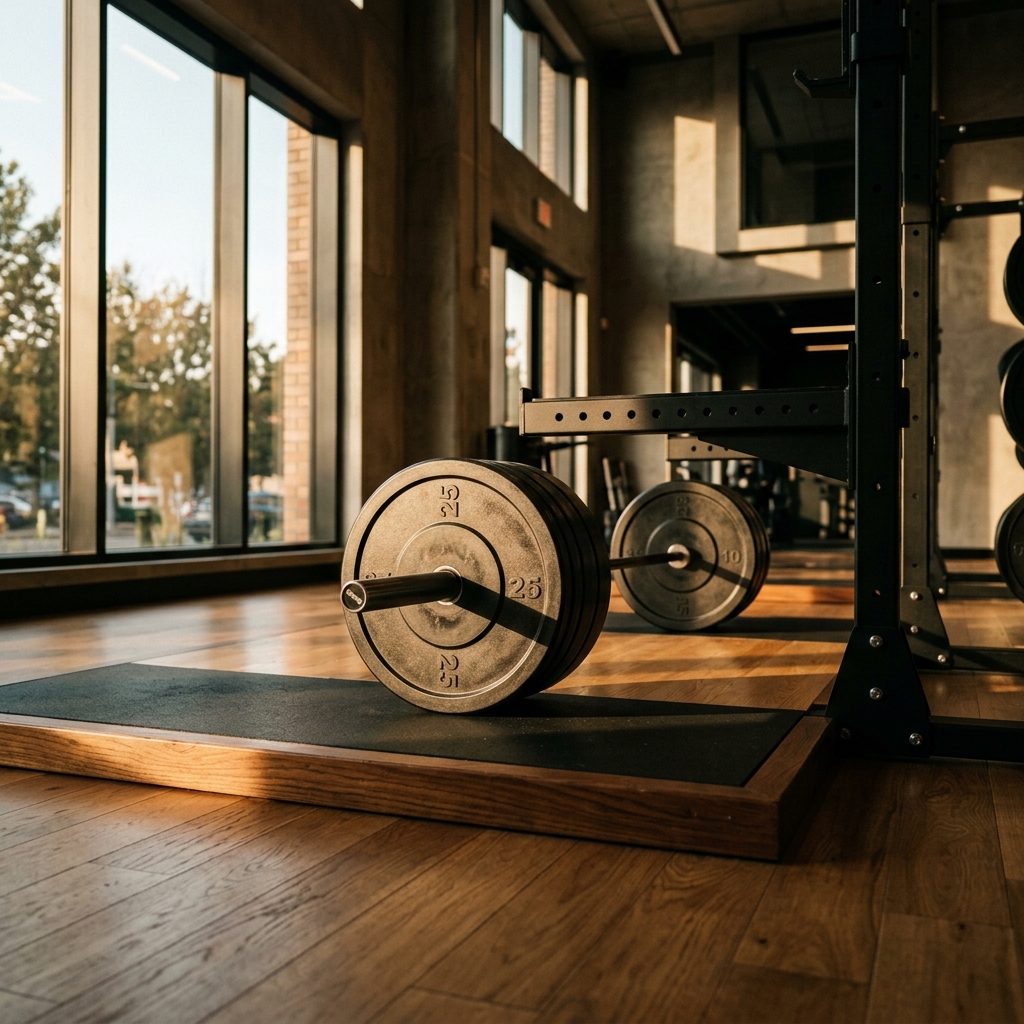
At a premium club like FLEX, you aren't just paying for heavy iron; you are paying for advanced biomechanical engineering. Free weights have a fixed resistance profile dictated by gravity: they are heaviest where the leverage is worst, and light where the leverage is best. Premium strength equipment solves this with variable resistance curves and CAM systems. These machines match the human strength curve, ensuring that the target muscle experiences peak tension throughout the entire range of motion.
Furthermore, isolating specific muscle groups near the limits of failure is highly inefficient—and often dangerous—without specialized equipment. Try safely loading your quads at a fully stretched position without a pendulum squat or a high-end hack squat machine. Try simulating the precise chest isolation of a converging cable press using resistance bands that lose tension as you fatigue. To replicate these angles and safety systems in a home garage would cost millions of rupees and require massive square footage. The mechanical advantage alone justifies the membership.
"Physical progression is dictated by the principle of progressive overload. Replicating the range of loads, variable resistance curves, and biomechanically correct safety profiles of an elite conditioning club in a home garage is financially and spatially impossible for 99% of athletes."
2. Stimulus Control and the Psychology of Environment
Human beings are deeply affected by environmental cues. In psychology, stimulus control refers to altering the environment to make a desired behavior more likely. Your brain is a master of association: it associates your home with comfort, recovery, family, and entertainment. When you try to train in the same room where you sleep or work, you are fighting a constant subconscious battle against distraction.
Entering a dedicated, high-performance training facility signals an immediate cognitive shift. Your phone goes into a pocket, your focus narrows, and your nervous system primes itself for exertion. This environmental priming is reinforced by social facilitation—a psychological phenomenon where individuals perform tasks better or with higher intensity when in the presence of others. The clanking of iron, the high-tempo music, and the shared focus of other members training around you trigger mirror neurons that push you to work harder than you ever would alone.
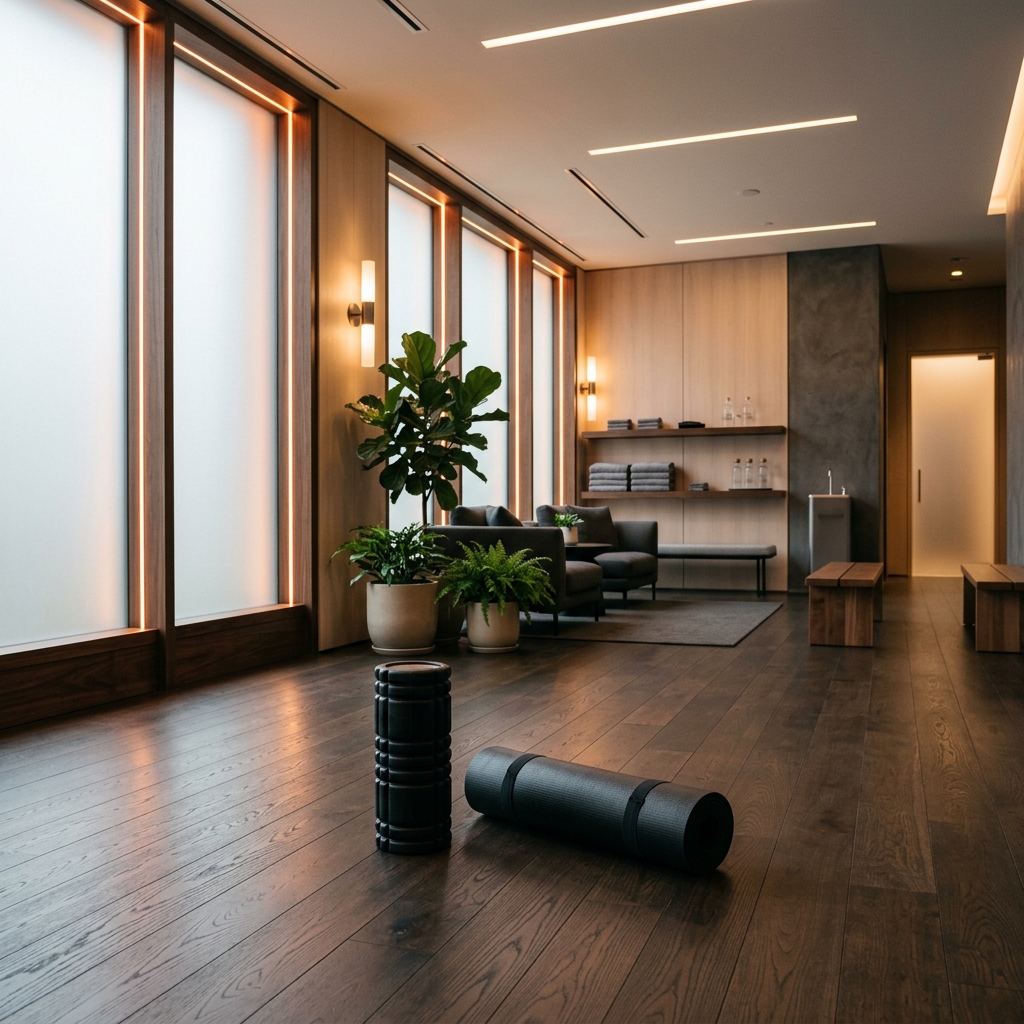
At FLEX, we designed our interiors from the ground up to maximize this psychological shift. The dark, industrial design, custom lighting accents, and acoustic treatment create a sensory bubble. In this space, household distractions and work emails fade away, allowing you to train with absolute, uninterrupted intensity.
3. The Health and Longevity Value Equation
Let's look at the financial math of longevity. A gym membership is often viewed as a discretionary luxury expense, while medical treatments, physical therapy, and prescription drugs are accepted as unavoidable costs. This is backward logic. Investing in preventative strength training is the most cost-effective health insurance you can buy.
By maintaining lean muscle mass, you build a metabolic sink that regulates blood glucose, improves insulin sensitivity, and supports hormonal health. Resistance training increases bone mineral density, protecting your joints and spine from age-related degeneration. When you divide the monthly membership cost by 30 days, it is equivalent to the price of a single cup of premium coffee per day. The dividend it pays in daily energy, mental clarity, reduced sick days, and long-term health is immeasurable.
4. The Accountability, Safety, and Expertise Dividend
Training in isolation increases the risk of plateaus and injury. Without a structured environment, it is easy to skip reps, cut workouts short, or practice poor form. A premium facility offers an ecosystem of accountability. You are surrounded by experienced lifters, certified trainers, and staff who monitor safety, offer technical feedback, and ensure a secure environment.
At FLEX, you gain access to a curated community of individuals who take their physical development seriously. This culture of execution raises your own standards. Whether it's getting a spot on a heavy bench press or learning a new movement pattern from a fellow lifter, the community accelerates your progress in ways a solo home workout never can.
ROI Self-Audit: Is it Worth It for You?
To determine if a premium membership is worth it for your specific situation, ask yourself the following questions:
- Consistency Check: Have you struggled to maintain a training routine at home due to distractions or lack of motivation?
- Goal Alignment: Are your goals focused on building serious strength, gaining muscle mass, or maximizing athletic performance? (If yes, advanced equipment is mandatory).
- Time Efficiency: Do you want to maximize your results in 45-60 minutes without waiting for equipment or cleaning up a home gym?
- Preventative Health: Do you view fitness as an investment to prevent chronic diseases and maintain joint longevity?
The Verdict
If you treat fitness as a casual, low-stakes chore, a home workout might suffice. But if you see your body as your primary vehicle for performance, productivity, and life span, a premium gym membership is a critical investment. The environment, the elite biomechanical tools, and the training culture at FLEX are built to ensure that this investment pays dividends every single time you step through our doors.