The AI Spotter: Future-Proofing Your Gains
Leverage cutting-edge wearable technology and smart sensors to elevate lift precision, prevent injury, and unlock unprecedented performance insights.
Welcome, esteemed practitioners of strength and seekers of peak human performance, to an exploration of the next frontier in athletic development. For millennia, the pursuit of physical excellence has been an intricate dance between innate physiological capacity and the relentless refinement of technique. From the ancient Olympic Games to the hallowed halls of modern powerlifting and bodybuilding, the fundamental variables have remained largely constant: load, volume, intensity, and form. Yet, our ability to precisely quantify, analyze, and optimize these variables has historically been constrained by subjective observation and rudimentary instrumentation.
Enter the era of the AI Spotter—a paradigm shift poised to fundamentally redefine how we approach training, injury mitigation, and the meticulous charting of our physiological progress. This is not merely about smartwatches tracking heart rates; it's about an integrated ecosystem of advanced wearable technology, sophisticated smart sensors, and powerful artificial intelligence algorithms collaborating to provide an unparalleled depth of insight into every single repetition, every lift, every movement pattern. The promise is profound: to transcend the limitations of human perception, to identify minute biomechanical discrepancies before they escalate into injury, and to unlock unprecedented performance plateaus through data-driven, hyper-personalized protocols.
Imagine a future where your training is not just guided by a coach's discerning eye, but augmented by an omnipresent, omniscient digital assistant capable of analyzing countless data points in real-time, offering instant, objective feedback, and predicting future performance trajectories with astounding accuracy. This is the promise of the AI Spotter: an intelligent companion that doesn't just count reps but deciphers the very language of your body, ensuring optimal execution, safeguarding against potential harm, and systematically engineering the conditions for maximal gains. Let us delve into the intricate science and groundbreaking applications that are future-proofing your gains.
The Biomechanical Ballet: Science of the AI Spotter
At its core, the AI Spotter functions by meticulously capturing and interpreting the complex interplay of forces and motions that define human movement. This is a deep dive into **biomechanics**, specifically leveraging principles of **kinematics** and, increasingly, **kinetics**. Wearable sensors, typically integrating microelectromechanical systems (MEMS) such as accelerometers, gyroscopes, and magnetometers, are strategically placed on the body or integrated into equipment. These tiny, yet powerful, instruments continuously collect raw data on spatial orientation, angular velocity, and linear acceleration across multiple axes.
Deconstructing Movement: From Raw Data to Actionable Insights
The raw data streams from these sensors are fed into sophisticated AI algorithms, often employing machine learning models like recurrent neural networks or deep learning architectures. These algorithms are trained on vast datasets of optimal and sub-optimal lifting techniques, allowing them to differentiate subtle deviations with incredible precision. For instance, during a barbell back squat, the AI system can track joint angles at the knee, hip, and ankle, monitor the velocity and acceleration of the barbell, and even infer the relative contributions of various muscle groups based on established biomechanical models. The system doesn't just see a squat; it sees the precise arc of the bar, the symmetry of hip descent, the moment of sticking points, and the velocity of concentric phase.
"The true power of AI in fitness lies not just in data collection, but in the intelligent interpretation of that data to create actionable feedback loops, transforming abstract numbers into tangible improvements in technique and performance."
Beyond traditional motion capture, advanced systems are beginning to integrate **Electromyography (EMG)** sensors. While often complex to implement for everyday training, surface EMG can provide valuable insights into muscle activation patterns, helping to identify muscular imbalances or suboptimal recruitment strategies. This level of data synthesis allows the AI to move beyond mere descriptive analysis to prescriptive recommendations, guiding users towards more efficient and safer movement patterns.
Velocity-Based Training (VBT) and Load Tracking
A critical component of the AI Spotter’s analytical arsenal is its capacity for precise load and barbell path tracking. Devices such as **GymAware FLEX**, **Vitruve**, or the **Push Band 2.0** (or similar IMU-based velocity trackers) utilize linear position transducers or integrated inertial measurement units (IMUs) to measure bar velocity in real-time. This is the foundation of **Velocity-Based Training (VBT)**, a scientifically validated method for optimizing training adaptations. By understanding the bar's velocity at a given load, we gain insight into an athlete's daily readiness, the actual intensity of the lift, and even differentiate between specific training goals like **maximal strength**, **power**, or **hypertrophy** based on the **force-velocity curve**. A slower velocity might indicate fatigue or a higher relative intensity, prompting the AI to suggest a deload or a reduction in reps to maintain technique integrity.
Precision: Elevating Lift Execution to an Art Form
The most immediate and tangible benefit of an AI Spotter is its unparalleled ability to refine lift precision. Traditional coaching, while invaluable, is inherently limited by human reaction time, attention span, and the sheer volume of data involved in complex multi-joint movements. An AI spotter offers real-time, objective feedback, ensuring every single repetition contributes optimally to your desired adaptations.
Real-Time Form Feedback and Biomechanical Perfection
Imagine performing a heavy deadlift, and receiving instant haptic feedback or an audible cue instructing you to "engage lats" or "reduce hip rise" as soon as a biomechanical fault is detected. This is no longer science fiction. AI systems can identify deviations from an optimal bar path in a bench press, inadequate squat depth, or a rounded back during a deadlift with microsecond precision. This continuous feedback loop accelerates motor learning and ingrains superior movement patterns. Esteemed coaches like Jeff Nippard emphasize the critical importance of impeccable form for both efficacy and injury prevention. His detailed guides provide invaluable insights that AI can now help you internalize.
As Jeff Nippard masterfully demonstrates in his squat guide, seemingly minor technique adjustments can dramatically impact muscle activation and safety. The AI spotter ensures these principles are applied consistently, rep after rep. This objective validation means you're no longer guessing if your depth was sufficient or if your bar path was truly linear; the data confirms it.
Optimizing Repetition Velocity and Intent
Beyond static form, the AI Spotter excels at monitoring the dynamic aspects of a lift. For those pursuing **hypertrophy**, maintaining a controlled eccentric phase and an explosive concentric drive is paramount. For **power** athletes, maximizing bar velocity with proper technique is the goal. VBT devices, integrated with AI, analyze average and peak concentric velocity, providing insights into your intent and effort level. This allows for dynamic adjustment of sets and reps based on how quickly you're moving the weight, a concept known as **autoregulation**. If your bar speed drops below a pre-determined threshold, the AI can alert you to terminate the set, preventing excessive fatigue and preserving technical integrity. This is a far more nuanced approach to **progressive overload** than simply adding weight, focusing on the quality of each repetition.
Prevention: Fortifying Against Injury with Predictive Analytics
One of the most transformative applications of the AI Spotter is its capacity for proactive injury prevention. By continuously monitoring biomechanical data, the system can identify subtle red flags long before they manifest as pain or outright injury.
Early Warning Systems for Form Degradation and Asymmetry
As fatigue accumulates within a set or across a workout, form invariably begins to degrade. The human eye might miss the slight rounding of the lower back on the 8th rep of a heavy deadlift, but the AI Spotter will not. It can detect the minute shift in a spinal angle or a nascent hip shift, flagging these as potential injury precursors. More profoundly, AI can identify **asymmetries**—imbalances in movement patterns between the left and right sides of the body. If your left shoulder consistently lags your right during a dumbbell press, or your squat favors one hip, the AI can highlight this, allowing you to address muscular imbalances or mobility restrictions before they lead to chronic issues.
As Jeff Nippard and others in the field of exercise science often point out, minor biomechanical tweaks can have profound impacts on joint health and long-term performance. The AI Spotter serves as an ever-vigilant guardian, ensuring these principles are upheld.
Load Management and Recovery Insights
Injury prevention extends beyond just form; it encompasses intelligent load management and adequate recovery. Integrating data from AI Spotters with advanced physiological monitoring wearables—such as the **Oura Ring**, **Whoop Strap**, or high-end **Garmin Fenix** watches that track **Heart Rate Variability (HRV)**, sleep patterns, and recovery metrics—allows for a holistic view of your readiness. AI algorithms can correlate drops in bar velocity or subtle form deterioration with objective recovery markers. If your HRV is low and sleep quality is poor, the AI might recommend a reduced load, fewer sets, or even an active recovery day, thus preventing overtraining, acute fatigue, and subsequent injury. Dr. Andrew Huberman, a neuroscientist renowned for his work on optimizing human performance, frequently emphasizes the critical role of sleep and recovery in physical and cognitive function.
His insights into the science of active recovery underscore how AI can help us apply these principles in real-time, tailoring our training to our body's current state rather than rigidly following a pre-set program regardless of daily fluctuations.
Performance: Unlocking Unprecedented Gains Through Data
While precision and prevention are critical, the ultimate promise of the AI Spotter is to systematically enhance performance and accelerate the achievement of your fitness goals. This involves sophisticated data analysis that transcends simple tracking, moving into the realm of predictive analytics and hyper-personalized programming.
Advanced Progressive Overload Strategies
The bedrock principle of muscle growth and strength adaptation is **progressive overload**. Traditionally, this meant adding more weight, more reps, or more sets. The AI Spotter revolutionizes this by offering a multifaceted, intelligent approach. It can analyze your entire training history, identifying which variables (load, volume, frequency, density, specific exercise variations, or even intra-set rest periods) trigger the most favorable adaptations for you. The system can then dynamically suggest the optimal increment for your next workout, not just in terms of weight, but also in desired bar velocity, tempo prescriptions, or slight biomechanical adjustments to increase mechanical tension. This detailed feedback ensures you are consistently challenging your muscles in the most effective way possible, stimulating pathways like the **mTOR pathway** for maximal **muscle protein synthesis**.
As Dr. Mike Israetel from Renaissance Periodization elucidates, the science of **hypertrophy** is complex, involving numerous variables that must be intelligently manipulated. The AI Spotter provides the analytical power to navigate this complexity for each individual.
Personalized Training Protocols and Biofeedback Integration
The AI Spotter is the ultimate tool for personalized training. It moves beyond generic templates, creating dynamic programs that adapt in real-time based on your daily performance, recovery metrics, and even projected physiological responses. This level of customization optimizes **volume**, **intensity**, and **frequency** for your unique biology, training age, and specific goals, whether that's peaking for a powerlifting meet or maximizing **hypertrophy** for a bodybuilding show.
Looking further into the future, imagine an AI Spotter integrating not just lifting data, but also your nutritional intake, tracked via platforms like MyFitnessPal or Cronometer, and even blood glucose or ketone levels from continuous glucose monitors. This level of biofeedback could allow the AI to optimize **caloric balance**, macronutrient timing, and hydration around your training sessions for maximal recovery and performance. Dr. Layne Norton, a prominent figure in evidence-based nutrition and training, consistently highlights the synergistic relationship between diet and exercise for achieving optimal body composition and strength.
The integration of AI with nutrition data would bring Dr. Norton's principles to life in a dynamically adaptable, personalized framework.
Sample AI-Driven Dynamic Training Protocol Adjustment
To illustrate the practical application of these insights, consider a hypothetical scenario where an athlete is scheduled for a heavy squat session, but their AI Spotter has detected subtle indicators of fatigue or suboptimal recovery.
| Metric / Factor | Initial Program (Scheduled) | AI-Driven Adjustment (Actual) |
|---|---|---|
| HRV Score (Morning) | Normal (70ms) | Reduced (45ms) - Indicative of Stress/Fatigue |
| Sleep Quality (Previous Night) | Excellent (8h, 90% Efficiency) | Poor (6h, 70% Efficiency) - Detected by Oura Ring |
| Planned Exercise | Barbell Back Squat | Barbell Back Squat (Modified) |
| Planned Load (Top Set) | 130kg for 5 reps | 120kg for 3-4 reps (velocity priority) |
| Target Bar Velocity (Concentric) | 0.4-0.5 m/s | 0.6+ m/s (Maintain speed, reduce mechanical stress) |
| Set Termination Trigger | Rep failure or prescribed reps | Drop of 20% from peak velocity OR 0.4 m/s threshold |
| Form Feedback Focus | General cues | Emphasis on "Maintain upright torso" and "Knees out" to prevent form breakdown under fatigue |
| Accessory Exercise Adjustment | RDLs, Leg Press | Reduced volume/intensity; focus on unilateral work (e.g., Dumbbell Reverse Lunges for stability) |
The Ecosystem of the AI Spotter: Gear and Integration
The full potential of the AI Spotter is realized through an interconnected ecosystem of hardware and software. This convergence of technologies creates a seamless feedback loop that empowers the athlete.
Smart Sensors and Wearable Technology
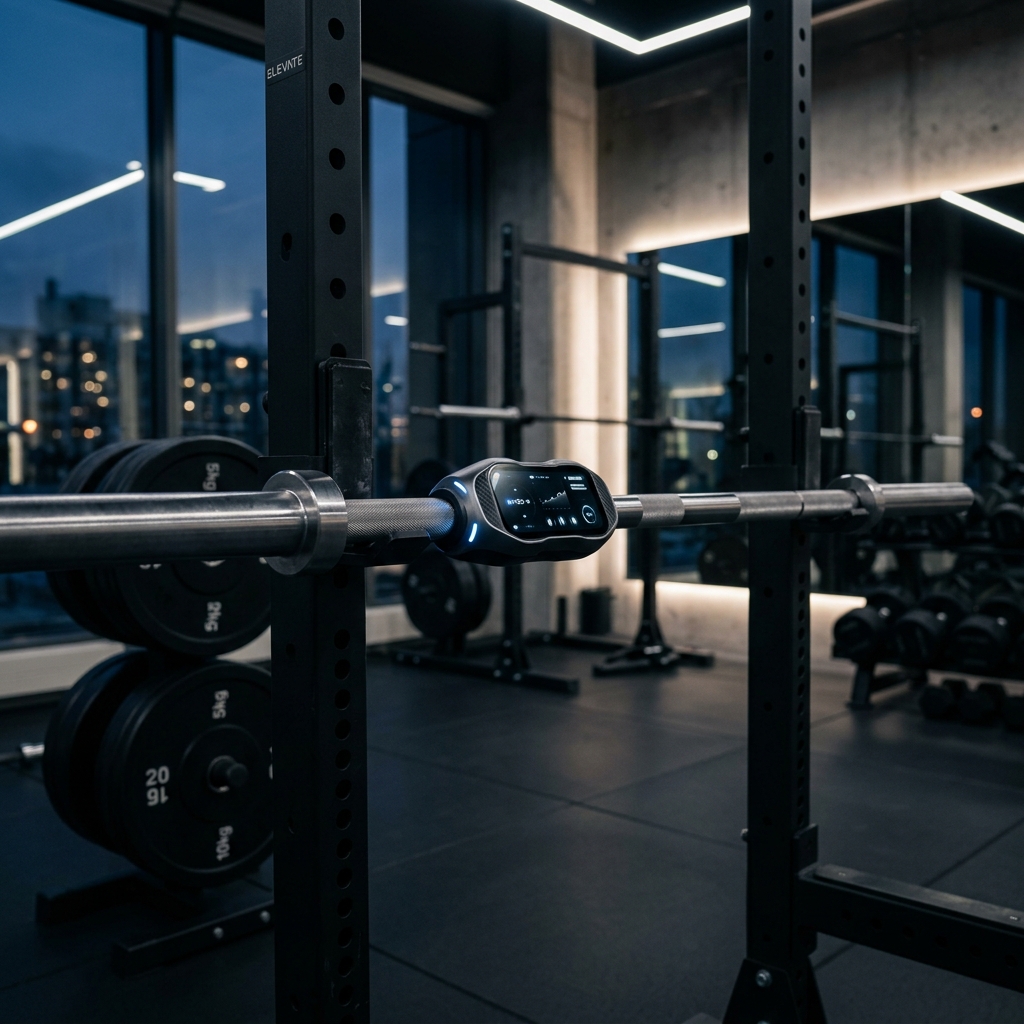
The foundation consists of accurate and reliable sensors. Dedicated fitness trackers with advanced IMUs, like the **Push Band 2.0** or **Beast Sensor**, attach directly to the barbell or body, providing highly precise velocity and acceleration data. More generalized wearables such as the **Apple Watch Ultra** or **Garmin Fenix** watches offer increasingly sophisticated motion tracking capabilities that, while not as precise for bar velocity, can contribute valuable biometric data (HRV, heart rate zones, sleep). Smart apparel, with embedded sensors, represents the next generation, offering non-invasive, comprehensive movement analysis.
Smart Gym Equipment and Software Platforms
The gym itself is evolving. Connected barbells and plates are emerging, offering integrated load sensing and tracking without external attachments. Brands like **Rogue Fitness** and **Eleiko** are at the forefront of precision engineering, and it's only a matter of time before integrated smart technology becomes standard. Beyond dedicated gym equipment, intelligent camera-based systems, such as those used by **OpenBarbell V3** (when paired with external cameras), can track movement without direct contact. The software platforms that aggregate and interpret this data are equally crucial, often featuring intuitive dashboards, performance analytics, and AI-driven coaching suggestions, such as those found in platforms like **Tonal** or **Tempo Fit** for home gyms. For footwear, while not yet "smart" in the AI Spotter sense, foundational training shoes like the **Nike Metcon**, **Adidas Adipower**, or **Reebok Nano** provide the stable platform essential for maximizing the data collected by external sensors and ensuring proper biomechanical ground interaction.
Challenges and the Enduring Human Element
While the potential of the AI Spotter is immense, it's essential to acknowledge the nascent stage of this technology and the inherent challenges. Data privacy and security are paramount concerns as intimate physiological and performance data are collected. The cost and accessibility of these advanced systems remain a barrier for many. Furthermore, the AI Spotter is designed to augment, not replace, the human coach. The nuances of motivational psychology, the ability to read non-verbal cues, and the personalized emotional support a great human coach provides are irreplaceable. Developing robust **proprioception** and body awareness remains crucial, lest we become overly reliant on external feedback and diminish our innate sense of movement. The AI Spotter is a powerful tool, a co-pilot, not the sole pilot, in the journey to peak performance.
Conclusion: The Intelligent Evolution of Strength Training
The AI Spotter is not merely a technological novelty; it represents a fundamental evolution in our understanding and application of exercise science. By harnessing the power of cutting-edge wearable technology and advanced artificial intelligence, we are moving beyond subjective observation into an era of unprecedented precision, proactive injury prevention, and hyper-personalized performance optimization. This intelligent companion promises to elevate every lift, safeguard every joint, and unlock latent potential within every athlete.
From optimizing fundamental movements like the squat, bench, and deadlift with objective biomechanical feedback to dynamically adjusting training variables based on real-time physiological readiness, the AI Spotter is poised to future-proof your gains. As Professor Miles Vantress, I assert that embracing this technology is not just about staying ahead of the curve; it's about systematically building a stronger, more resilient, and ultimately, more capable human being. The future of fitness is intelligent, data-driven, and empowering, allowing us all to reach new pinnacles of physical achievement.