The Belt Paradox: Power Over Protection?
Beyond Bracing: The Advanced Biomechanics of Lifting Belts for Performance, Not Just Injury Prevention
For decades, the lifting belt has been a ubiquitous, yet often misunderstood, accessory in the realm of strength training. Commonly perceived as a mere prophylactic device against injury, its true potential, particularly in optimizing peak performance and facilitating **progressive overload**, remains largely underexplored by many in the fitness community. As Professor Alex Thorne, PhD in Biomechanics, I aim to dissect the intricate physiological mechanisms by which a lifting belt transcends its perceived role as a protective barrier, emerging instead as a potent biomechanical tool for enhancing power output, stability, and ultimately, muscular development. This exploration will move beyond superficial observations, delving into the nuanced interplay of **intra-abdominal pressure (IAP)**, spinal mechanics, and central nervous system activation.
The Biomechanical Foundation: Understanding Intra-Abdominal Pressure
At the core of the belt's performance-enhancing capabilities lies its profound influence on **intra-abdominal pressure (IAP)**. When properly applied and combined with the **Valsalva maneuver**—a powerful expiratory effort against a closed glottis—a lifting belt provides an external scaffold that the abdominal musculature can brace against. This external resistance allows for a significant increase in internal pressure within the abdominal cavity.
Think of the torso as a hydraulic cylinder. By increasing the pressure within this cylinder, the belt effectively creates a rigid, stable core, which has several critical implications for heavy lifting. This elevated IAP acts as a rigid fluid ball, resisting compressive forces on the vertebral column. Research, including studies published in journals like the Journal of Strength and Conditioning Research, consistently demonstrates that IAP significantly contributes to spinal stability, particularly during compound movements such as squats and deadlifts. It reduces shear forces on the lumbar spine and minimizes vertebral compression, not simply by "supporting" the back in a passive sense, but by actively creating a more robust, integrated system.
Enhanced Core Rigidity and Spinal Neutrality
The increased IAP facilitates superior core rigidity, allowing for better maintenance of a neutral spine position throughout the lifting motion. This is paramount for maximizing force transfer from the lower body to the barbell. Without adequate core stability, energy can be "leaked" or dissipated through unwanted spinal flexion or extension, leading to inefficient movement patterns and a reduction in maximal lift potential. The belt, therefore, acts as a biofeedback mechanism, encouraging the lifter to actively engage their deep core musculature—the **transverse abdominis**, multifidus, and pelvic floor—against its resistance, leading to a more powerful and controlled movement. This can be particularly beneficial when striving for new personal bests or working through sticking points.
"A lifting belt doesn't just protect the back; it empowers the core. It's a feedback loop for superior bracing, transforming the torso into an unyielding conduit for power generation." - Professor Alex Thorne, PhD (Biomechanics)
Performance Augmentation: Beyond Stability
The benefits of lifting belts extend far beyond mere spinal stabilization. Their influence on neuromuscular activation and biomechanical efficiency directly translates into measurable performance improvements.
Increased Force Output and Motor Unit Recruitment
By providing enhanced core stability, the belt allows the prime movers—such as the quadriceps, glutes, and hamstrings during a squat or deadlift—to operate more efficiently. When the core is optimally rigid, the body's nervous system receives a signal of enhanced stability. This can potentially lead to greater **motor unit recruitment** and increased firing rates within the working muscles. Essentially, the brain feels "safer" and more stable, allowing it to unleash more of its muscular potential, leading to a higher peak force production. This is a critical factor for strength athletes aiming to lift maximal loads.
Consider the intricate biomechanics of a perfect deadlift. As demonstrated by experts like Jeff Nippard, meticulous technique is paramount. The belt facilitates the maintenance of an ideal spinal position, allowing for maximum power transfer from the hips and legs directly into the bar.
A similar principle applies to the squat, where maintaining an upright torso and stable core is vital for driving force through the entire range of motion. Jeff Nippard's comprehensive guides often emphasize the role of bracing and core engagement, which a belt can significantly amplify.
Proprioceptive Feedback and Technique Refinement
Beyond direct mechanical support, the lifting belt offers invaluable **proprioceptive feedback**. The constant pressure of the belt against the abdominal wall serves as a tactile cue, reminding the lifter to brace harder and engage their core more effectively. This heightened bodily awareness can lead to improved technique over time, even when the belt is not worn. Lifters learn to 'push out' into the belt, replicating the sensation of optimal IAP generation. This neurological patterning can translate into more efficient movement and a reduced risk of compensatory patterns. This is akin to the biomechanical tweaks and refinements often discussed by experts like Jeff Nippard, which can unlock greater performance potential.
Strategic Application: When and How to Utilize a Belt
The "Belt Paradox" often arises from a misunderstanding of its appropriate application. A belt is a tool, not a crutch. Its strategic use is crucial for maximizing its performance benefits without hindering the development of intrinsic core strength.
The Performance Threshold: RPE and Load Management
A general guideline is to reserve belt use for sets approaching maximal effort or specific strength cycles. Many elite strength coaches and researchers, including Dr. Mike Israetel of Renaissance Periodization, advocate for using a belt when intensity reaches approximately 80% or more of your one-repetition maximum (1RM), or when the **Rating of Perceived Exertion (RPE)** is 7 or higher. This ensures that the belt is used to augment peak performance on heavy sets, rather than substituting for foundational core strength development during lighter, technique-focused work. For hypertrophy-focused training, the belt can be employed on heavier compound sets to allow for greater volume at higher intensities, stimulating mechanical tension and metabolic stress without compromising form due to core fatigue.
Selection of the Optimal Belt
Not all belts are created equal. The biomechanical efficacy is heavily dependent on the belt's design, material, and fit.
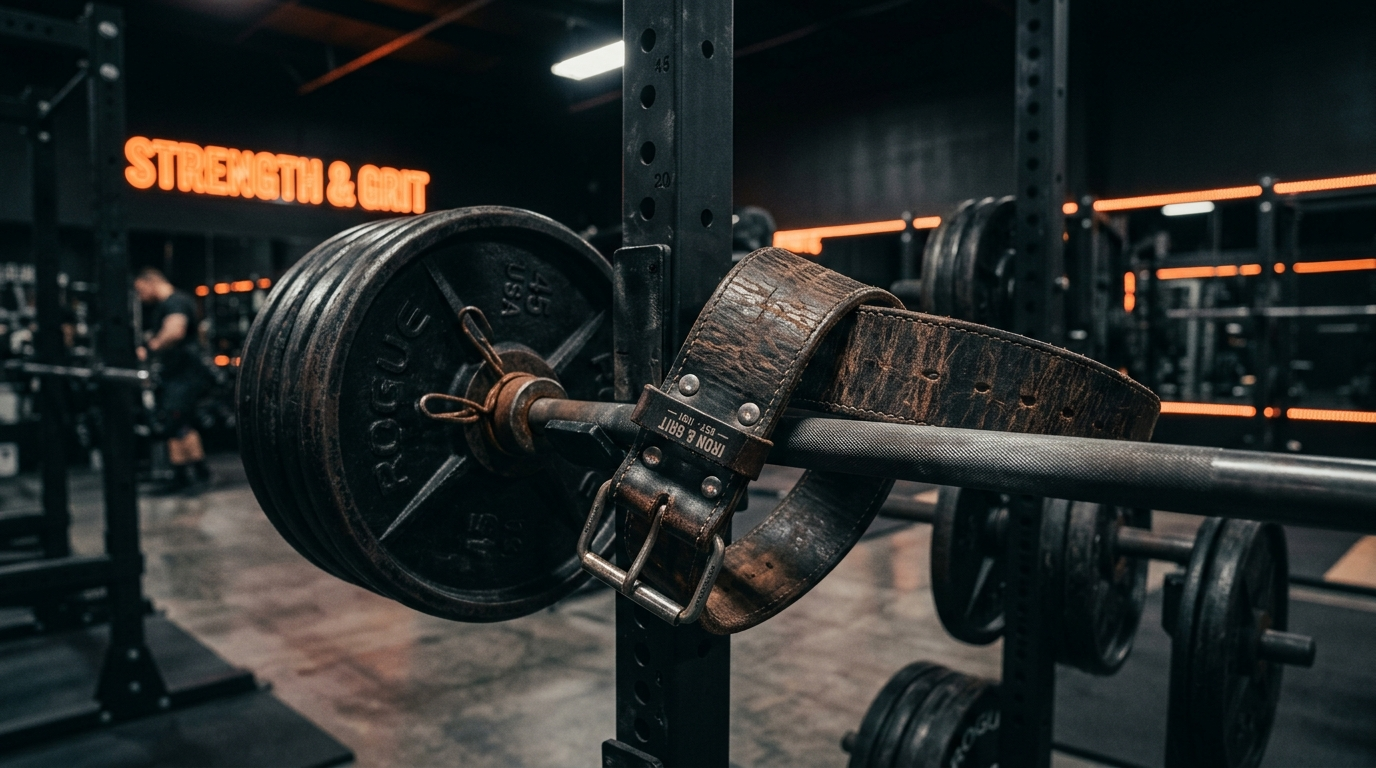
- Powerlifting Belts (10mm or 13mm thick): These are typically 4-inches wide around the entire circumference. Brands like SBD Apparel, Inzer Forever Buckle Belt, and Rogue Fitness Ohio Lifting Belt are renowned for their quality and provide maximum IAP support. The uniform width optimizes bracing potential for squats and deadlifts.
- Olympic Weightlifting Belts: Often wider at the back and tapering at the front, these are designed to allow for more flexibility during movements like the snatch and clean & jerk. While still offering support, their design accommodates the greater mobility required.
The key is a belt that is stiff enough to provide solid resistance but comfortable enough to allow for a full Valsalva maneuver. It should be worn snugly, typically around the navel or slightly lower, depending on individual preference and the exercise being performed, allowing for maximal abdominal wall bracing.
Integration Protocol: A Phased Approach to Belt Usage
To truly harness the performance-enhancing attributes of a lifting belt, a structured approach to its integration into your training regimen is essential. This ensures maximal benefit without fostering over-reliance.
| Phase | Focus | Belt Application | Rationale |
|---|---|---|---|
| Phase 1: Foundation (Weeks 1-4) | Mastering Unbelted Core Bracing, Technique Refinement | No Belt. Focus on developing intrinsic core strength through exercises like planks, bird-dogs, and anti-rotation movements. | Establishes a strong, independent core. Prevents over-reliance on external support. Crucial for long-term spinal health and movement efficiency. |
| Phase 2: Introduction (Weeks 5-8) | Introducing Belt for Heavier Lifts, Biofeedback | Belt for Top Sets (RPE 7-8 or >80% 1RM) on primary compound lifts (Squat, Deadlift). Use for 1-2 working sets. | Introduces the proprioceptive feedback of the belt. Allows adaptation to increased IAP. Reserves belt for true performance augmentation. |
| Phase 3: Performance Augmentation (Weeks 9-12) | Maximizing Force Output, Managing Fatigue | Belt for Working Sets (RPE 8+ or >85% 1RM) on primary lifts. Potentially for some accessory work requiring high spinal stability (e.g., heavy rows). | Optimizes IAP for peak force production. Allows for higher volume and intensity in targeted strength cycles. Manages core fatigue over longer sessions. |
| Phase 4: Deload / Re-evaluation | Active Recovery, Technique Review | Belt usage significantly reduced or eliminated. Focus on lighter loads, perfect technique, and active recovery strategies. | Allows the intrinsic core to recover and re-establish baseline strength. Prevents adaptation plateaus. Re-evaluates unbelted movement patterns. |
Holistic Performance Ecosystem: Beyond the Belt
While the belt is a powerful tool, it's merely one component within a larger performance ecosystem. Optimal lifting biomechanics are also heavily influenced by footwear, recovery, and nutrition.
Footwear for Stability and Drive
The kinetic chain begins from the ground up. Proper lifting footwear provides a stable, incompressible base crucial for transferring force and maintaining balance. For squats, weightlifting shoes with an elevated heel like the Adidas Adipower, Nike Romaleos, or Reebok Legacy Lifter facilitate a more upright torso and greater ankle dorsiflexion, which can be advantageous for depth. For deadlifts, flat-soled shoes like Converse Chuck Taylors, Vans Old Skool, or specific deadlift slippers (e.g., SBD Deadlift Slippers) minimize the range of motion and maximize ground contact for optimal drive. Cross-training shoes like the Nike Metcon or Reebok Nano offer a versatile balance for general gym use but may not be optimal for maximal attempts in specific lifts.
Nutrition, Hydration, and Recovery
No amount of biomechanical advantage will compensate for inadequate recovery. Optimal performance, sustained **hypertrophy**, and injury resilience demand meticulous attention to nutrition, hydration, and sleep. Experts such as Dr. Layne Norton consistently highlight the fundamental role of caloric balance and macronutrient distribution in fueling performance and recovery.
Similarly, sleep hygiene and active recovery strategies, as frequently discussed by Dr. Andrew Huberman, are non-negotiable for repairing muscle tissue, replenishing energy stores, and optimizing central nervous system function.
Supplements, while secondary to a sound diet, can play a supportive role. For instance, **creatine monohydrate** (e.g., Optimum Nutrition Micronized Creatine, Myprotein Creatine Monohydrate) is extensively researched for its role in enhancing ATP regeneration and muscular power. High-quality protein powders (e.g., Optimum Nutrition Gold Standard 100% Whey, Dymatize ISO100) assist in muscle repair and growth, especially around intense training periods.
Conclusion: Embracing the Paradox
The lifting belt, when understood through the lens of advanced biomechanics, reveals itself not as a simple back protector, but as a sophisticated instrument for unlocking greater strength, stability, and ultimately, athletic potential. Its ability to amplify **intra-abdominal pressure**, enhance core rigidity, facilitate optimal motor unit recruitment, and provide invaluable proprioceptive feedback positions it as a critical tool for serious lifters. By embracing the paradox—using the belt not as a shield against weakness, but as a catalyst for power—athletes can strategically integrate this accessory to push past plateaus, achieve new levels of strength, and optimize their long-term training trajectory. As Professor Alex Thorne, I urge you to approach the belt with a scientific mindset, understanding its mechanisms, and applying it judiciously to truly elevate your performance.