The Ergonomic Edge: Handle Hacks for Peak Muscle Recruitment
Unlock hidden gains by optimizing your grip and bar mechanics with science-backed accessory choices.

In the intricate tapestry of strength and conditioning, often it is the seemingly minor threads that hold the greatest potential for structural integrity and enhanced performance. Among these, the ergonomics of your grip and the mechanics of bar interaction represent an often-underestimated frontier in the quest for **peak muscle recruitment** and sustainable gains. Dr. Kaelen Thorne, a recognized authority in biomechanics and exercise physiology, delves into the scientific rationale behind optimizing your handle choices, transforming a simple accessory into a powerful catalyst for muscular development. This isn't merely about preventing calluses; it's about engineering a superior interface between human and resistance, unlocking a deeper level of muscular engagement and mitigating the insidious creep of plateaus.
Traditional resistance training often defaults to standard barbell and dumbbell diameters, a universal approach that overlooks the profound impact subtle variations can have on neural drive, **force vector** optimization, and regional muscle activation. The astute lifter, however, understands that the human hand, a marvel of evolutionary engineering, can be a gateway to enhanced **proprioception** and a more potent stimulus for **hypertrophy**. By meticulously selecting and strategically employing a diverse arsenal of handles and grip aids, we can transcend the limitations of conventional training, ushering in an era of precision-engineered workouts that maximize every repetition.
The Biomechanical Imperative: How Grip Dictates Recruitment
At its core, every resistance exercise is a complex interplay of levers, forces, and muscular contractions. The point of contact – your grip – is the initial nexus where this kinetic chain begins. The geometry of your grip, encompassing its width, diameter, and orientation (supinated, pronated, neutral), directly influences the activation patterns of primary movers, synergists, and stabilizers. A sub-optimal grip can compromise the mechanical advantage, leading to compensation patterns, reduced **time under tension** for the target muscle, and an elevated risk of injury.
Consider the principle of **irradiation**, a neurophysiological phenomenon where a strong contraction in one muscle group can potentiate the contraction of adjacent or synergistic muscles. A firmer, more stable grip, especially with a thicker handle, can increase the neural drive not only to the forearm musculature but also proximally up the kinetic chain, enhancing the activation of larger muscle groups like the lats during pulling movements or the pectorals during pushing movements. This increased neural "spillover" can lead to greater **motor unit recruitment**, a critical factor in maximizing strength and **hypertrophic potential**.
"The hand is not merely a tool for holding; it is an antenna, transmitting vital proprioceptive feedback that informs the central nervous system, dictating the intensity and quality of downstream muscle contractions. To neglect its optimization is to leave gains on the table." - Dr. Kaelen Thorne
Neural Drive and Neuromuscular Efficiency
The **central nervous system (CNS)** plays a pivotal role in dictating the strength and endurance of muscle contractions. When you grip an object, sensory receptors in your hand send signals back to the CNS, which then recruits motor units to execute the desired movement. A stable, comfortable, and optimally challenging grip enhances this feedback loop, improving **neuromuscular efficiency**. This means your brain becomes more adept at recruiting the right muscle fibers at the right time, leading to more powerful and coordinated movements.
Moreover, the grip directly impacts the **rate of force development (RFD)**. Exercises requiring explosive power, such as Olympic lifts or plyometrics, necessitate an exceptionally strong and responsive grip to effectively transfer force from the body to the implement. By improving grip strength and efficiency through varied handle training, you enhance your overall athletic prowess, not just your forearm aesthetics.
Arsenal of Angles: Essential Handle Hacks and Their Scientific Basis
To truly capitalize on the ergonomic edge, one must embrace a diverse array of handle accessories, each designed to elicit specific physiological responses and target muscles with precision.
1. Thick Bar Training: The Neurological Amplifier
The advent of **thick bar training**, popularized by tools like **Fat Gripz** (available in various sizes like One, Pro, and Extreme) or dedicated implements like the **Rogue Fitness Axle Bar**, revolutionized the understanding of grip's role in whole-body strength. Research indicates that using a thicker grip (typically 2-3 inches in diameter) significantly increases forearm muscle activation. However, its benefits extend far beyond just grip strength. The increased surface area and requirement for greater hand activation lead to a phenomenon known as **neural overflow** or irradiation, as mentioned earlier.
This enhanced grip demand signals to the CNS that a heavier, more unstable load is being managed, compelling it to recruit a greater proportion of motor units throughout the entire kinetic chain. For instance, when performing deadlifts with a thick bar, not only do your forearms work harder, but you'll often feel a more profound activation in your lats and core, as the body instinctively braces harder to stabilize the load. This can translate to improved strength on standard barbell movements once you return to them.
As Jeff Nippard demonstrates in his detailed guide to the deadlift, precise bar path and full-body tension are paramount. Incorporating a thicker grip, even for accessory work or warm-up sets, can reinforce this full-body tension and stability, teaching your body to "lock down" more effectively when under load, enhancing your ability to execute such complex lifts with greater control and power.
2. Specialty Bars: Engineering Joint Health and Target Activation
Beyond thick bars, a plethora of specialty bars exist, each offering unique ergonomic advantages.
- The Swiss Bar (Multi-Grip Bar): Brands like **Rogue Fitness** offer excellent multi-grip bars with parallel, neutral grips. For individuals experiencing shoulder pain during traditional bench presses or overhead presses, the neutral grip can significantly reduce stress on the shoulder joint capsule and rotator cuff, allowing for continued **progressive overload** without exacerbating discomfort. This grip also emphasizes the triceps and upper chest fibers slightly differently, offering a novel stimulus for muscle growth.
- The Trap Bar (Hex Bar): A staple from manufacturers such as **Rogue Fitness** or **Titan Fitness**, the trap bar allows lifters to stand inside the implement, aligning the center of gravity more directly with the load. This leads to a more upright torso position during deadlifts and shrugs, reducing shear forces on the lumbar spine. Studies show trap bar deadlifts can generate similar or even greater peak force and power output compared to conventional deadlifts, with less spinal loading, making them excellent for power development and injury mitigation.
- The Safety Squat Bar (SSB): Often found in **Kabuki Strength** or **EliteFTS** lineups, the SSB features padded yokes that rest on the traps and shoulders, with handles extending forward. This design shifts the load forward, challenging the anterior core and upper back musculature more intensely, while also reducing external rotation and abduction forces on the shoulders, making it ideal for those with shoulder mobility issues or aiming to strengthen their posterior chain and core during squats.
As Jeff Cavaliere of Athlean-X often emphasizes in his shoulder training and injury prevention content, understanding biomechanical stress is key. Specialty bars are prime examples of equipment designed to manipulate these stresses for better performance and joint longevity.
3. Lifting Straps: Offloading for Overload
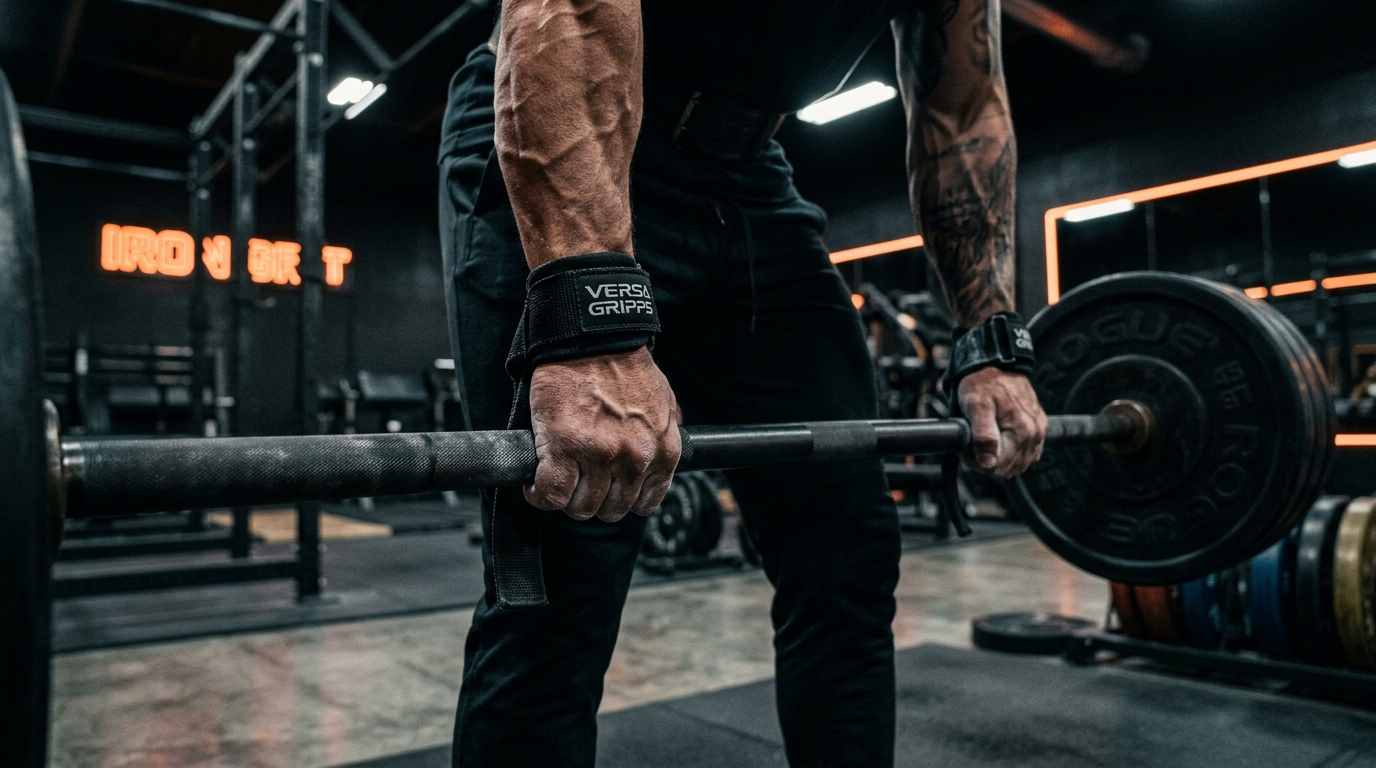
While integral for overall strength, grip can often be the limiting factor in exercises involving heavy pulling, such as deadlifts, rows, or heavy shrugs. This is where high-quality lifting straps, like **Versa Gripps**, **Rogue Nylon Lifting Straps**, or **IronMind Strong Enough Straps**, become invaluable. By taking the grip out of the equation, straps allow lifters to focus purely on the target muscle groups, facilitating heavier lifts and higher volumes for those muscles.
This strategy aligns with the principles of **hypertrophy** outlined by experts like Dr. Mike Israetel, where maximizing mechanical tension, muscle damage, and metabolic stress are paramount. If your grip gives out before your back, hamstrings, or glutes reach failure, you're not providing sufficient stimulus for those larger muscle groups to grow. However, it's crucial to use straps judiciously; overuse can hinder the development of intrinsic grip strength. A balanced approach would involve training grip directly with specific exercises and using straps only for your heaviest sets or when the target muscle is genuinely the limiting factor.
Dr. Mike Israetel's insights into hypertrophy and muscle growth science underscore the importance of optimal training stimuli. Lifting straps, when applied intelligently, ensure that the intended muscle group receives the necessary stimulus for growth, rather than being limited by auxiliary muscle fatigue.
4. Cable Attachments: Precision Angulation for Peak Contraction
Cable machines offer unparalleled versatility due to their constant tension and ability to be adjusted through a multitude of angles. The variety of handle attachments – from single D-handles, rope attachments, V-bars, to specialized multi-grip handles – allows for fine-tuning the line of pull and optimizing **muscle fiber recruitment** for **peak contraction**.
- Rope Attachments: Excellent for triceps extensions, face pulls, and hammer curls, as they allow for external rotation and a more natural wrist path, emphasizing specific heads of the muscle (e.g., long head of the triceps).
- V-Bar/Close Grip Handles: For pulldowns and rows, these handles emphasize the lower lats and provide a greater stretch and contraction range due to the neutral, narrow grip. Jeremy Ethier often highlights how subtle changes in grip and elbow path can dramatically alter lat activation, and these handles are key to that manipulation.
- Stirrup Handles: Allowing for free rotation, these are perfect for single-arm cable movements, ensuring optimal wrist and elbow alignment throughout the entire range of motion, reducing joint strain and maximizing target muscle activation.
Jeremy Ethier's detailed analysis of lat activation during pull-ups and pulldowns perfectly illustrates how grip width, type, and hand position profoundly influence the muscle fibers targeted. By experimenting with a variety of cable attachments, one can meticulously sculpt the back, hitting all areas for comprehensive development.
Integrating Handle Hacks: A Scientific Protocol
Intelligent integration of these handle hacks into your training program is critical for maximizing their benefits. It's not about randomly swapping out grips but strategically applying them based on your goals: strength, hypertrophy, injury prevention, or correcting muscular imbalances.
Sample Handle Hack Protocol for Enhanced Recruitment
| Exercise Category | Primary Goal | Recommended Handle Hacks & Brands | Application Strategy |
|---|---|---|---|
| Compound Lifts (e.g., Deadlifts, Rows) | Grip Strength & Full-Body Neural Drive | **Fat Gripz** (One or Pro), **Rogue Fitness Axle Bar**, **IronMind Strong Enough Straps** | Use **Fat Gripz** for warm-up/sub-maximal sets to enhance CNS activation. Use straps for working sets where target muscle (back/hamstrings) is the limiting factor. Periodically train heavy without straps to maintain grip integrity. |
| Pressing Movements (e.g., Bench, OHP) | Shoulder Health, Triceps & Chest Variation | **Rogue Fitness Swiss Bar**, **Fat Gripz** (Pro) | Employ Swiss Bar for pressing movements if experiencing shoulder discomfort, or to vary triceps stimulus. Use **Fat Gripz** on dumbbell presses for increased forearm/triceps engagement and neural drive. |
| Squats & Lower Body | Spinal Decompression, Core Strength, Quad/Glute Focus | **Kabuki Strength Safety Squat Bar**, **Rogue Fitness Trap Bar** | SSB for deload weeks or to target upper back/anterior core more intensely with less shoulder stress. Trap Bar for deadlifts/carries to reduce lumbar stress and allow for greater power output. |
| Cable & Machine Work | Targeted Hypertrophy, Peak Contraction | Variety of D-handles, Rope attachments, V-bars, Stirrup handles | Rotate attachments weekly or within a session to hit different muscle heads/angles. Focus on controlled eccentric and peak isometric contractions with varied grips to maximize **metabolic stress** and **muscle damage**. |
| Grip-Specific Training | Forearm Development, Overall Strength Carryover | **Captains of Crush Grippers**, **Fat Gripz** (Extreme), Plate Pinches, Farmers Walks (with **Rogue Fitness** dumbbells/kettlebells) | Dedicated 1-2 sessions per week at the end of a workout, or integrate into warm-ups. Focus on both crushing and static grip strength. |
Beyond the Handles: The Holistic Perspective
While handle hacks offer a potent avenue for enhanced muscle recruitment, they are but one component of a comprehensive approach to training. Optimal results require attention to nutrition, recovery, and overall programming.
Nutrition, as elucidated by experts such as Dr. Layne Norton, is the bedrock of adaptation. Adequate protein intake (e.g., from **Optimum Nutrition Gold Standard Whey**), carbohydrate consumption for energy, and healthy fats are essential for muscle repair and growth. Without the raw materials, even the most ergonomically perfect lift will yield diminishing returns.
Dr. Layne Norton's scientific approach to nutrition and caloric balance emphasizes that no amount of advanced training technique can outpace a deficient diet. Fueling your body correctly ensures that the powerful signals sent by optimizing your grip translate into tangible muscle growth and strength.
Similarly, recovery protocols, including sleep and active recovery, are non-negotiable. Dr. Andrew Huberman's work on neurobiology and performance highlights the critical role of sleep in hormone regulation and CNS recovery. Implementing active recovery strategies, such as light cardio or mobility work, can enhance blood flow and nutrient delivery, facilitating faster recuperation from intense training sessions.
Dr. Andrew Huberman's deep dives into active recovery and fatigue science provide a framework for understanding how to optimally recover from demanding workouts. This recovery allows the body to adapt to the enhanced stimuli provided by ergonomic handle choices.
Conclusion: Grasping the Future of Gains
The pursuit of maximal muscle recruitment and strength is an ongoing scientific endeavor, constantly evolving with new understanding of human physiology and biomechanics. By consciously manipulating the interface between our hands and the resistance, through strategic deployment of varied handles and grip accessories, we can unlock previously untapped reserves of muscular potential. From the neurological amplification of thick grips to the joint-sparing mechanics of specialty bars and the targeted hypertrophy afforded by diverse cable attachments, the ergonomic edge is a demonstrable, science-backed reality.
Embrace experimentation, listen to your body's feedback, and never underestimate the profound impact that seemingly small adjustments can have on your long-term progress. Integrating specific products like **Fat Gripz**, **Rogue Fitness** specialty bars, and **Versa Gripps** into your regimen is not just about having more gear; it's about leveraging intelligently designed tools to precisely engineer a superior training stimulus. The era of generic training is over. Welcome to the age of precision ergonomics, where every grip choice is a calculated step towards peak muscle recruitment and sustainable, profound gains. The journey to a stronger, more resilient physique begins with a mindful grasp.