The Gravity Grip
Beyond the Forearm: How Specialized Grip Tools Unlock Latent Strength Across All Major Lifts.
In the intricate tapestry of human strength, where the symphony of muscle fibers, neural pathways, and biomechanical leverage dictates performance, one element is consistently underestimated, relegated to the periphery of dedicated training protocols: grip strength. Far from being a mere accessory, the efficacy of your grip acts as a foundational bottleneck, a limiting factor that dictates your potential across virtually every major compound lift. It's the silent arbiter of how much weight you can truly move, how safely you can execute a rep, and ultimately, how profoundly you can stimulate **hypertrophy** and strength adaptations in prime movers.
Welcome to "The Gravity Grip," a deep dive beyond the superficial understanding of forearm aesthetics, into the profound neurological and physiological implications of a truly dominant grip. As Kaelen Vance, CSCS, I’ve observed countless athletes plateau not due to a lack of raw strength in their legs, back, or chest, but due to their inability to securely hold or stabilize the implement. This isn't just about holding onto a heavy deadlift; it's about the entire **kinetic chain** feedback loop, where a secure grip signals to the **central nervous system (CNS)** that the system is stable and capable of generating maximal force. We will explore how specialized grip tools are not just for arm wrestlers or strongmen, but are indispensable accessories that unlock **latent strength** and unparalleled stability across your squats, benches, and deadlifts, fostering a holistic improvement in your lifting prowess.
The Neurological Imperative: Grip as a Proximal Stabilizer
To truly appreciate the gravity of grip strength, we must first understand its intricate role within the human **neuromuscular system**. Your hands, replete with an extraordinary density of mechanoreceptors and proprioceptors, are primary conduits of information to your CNS. When your grip is strong and secure, these sensors relay a message of stability and control, a green light for your CNS to recruit more **motor units** in your primary movers. This phenomenon is often described through the **irradiation principle**, a concept championed in methodologies like Pavel Tsatsouline's work, where tensing one part of the body, such as the hands, leads to a spillover effect of tension and force generation in adjacent or even distant muscle groups.
Consider the act of "crushing" the barbell. This isn't just a mental cue; it's a physiological command. By intensely contracting the muscles of the hand and forearm – specifically the **flexor digitorum profundus**, **flexor digitorum superficialis**, and the intrinsic hand muscles like the **lumbricals** and **interossei** – you create a cascade of neurological signals. These signals travel up the spinal cord, influencing the co-activation of stabilizing muscles in the shoulders (e.g., **rotator cuff**, **deltoids**), back (e.g., **lats**, **trapezius**), and even the core. This enhanced **proximal stability** allows your prime movers, such as the pectorals in a bench press or the quadriceps in a squat, to operate more efficiently and powerfully, uninhibited by a perceived lack of control at the distal end.
"The strength of the chain is its weakest link. For many lifters, the hands and forearms represent that critical juncture. By fortifying your grip, you're not just enhancing a single muscle group; you're elevating the entire kinetic chain's capacity for force production and stability." – Kaelen Vance, CSCS
Grip's Pervasive Influence Across the Big Lifts
The Deadlift: The Obvious, Yet Underestimated Bottleneck
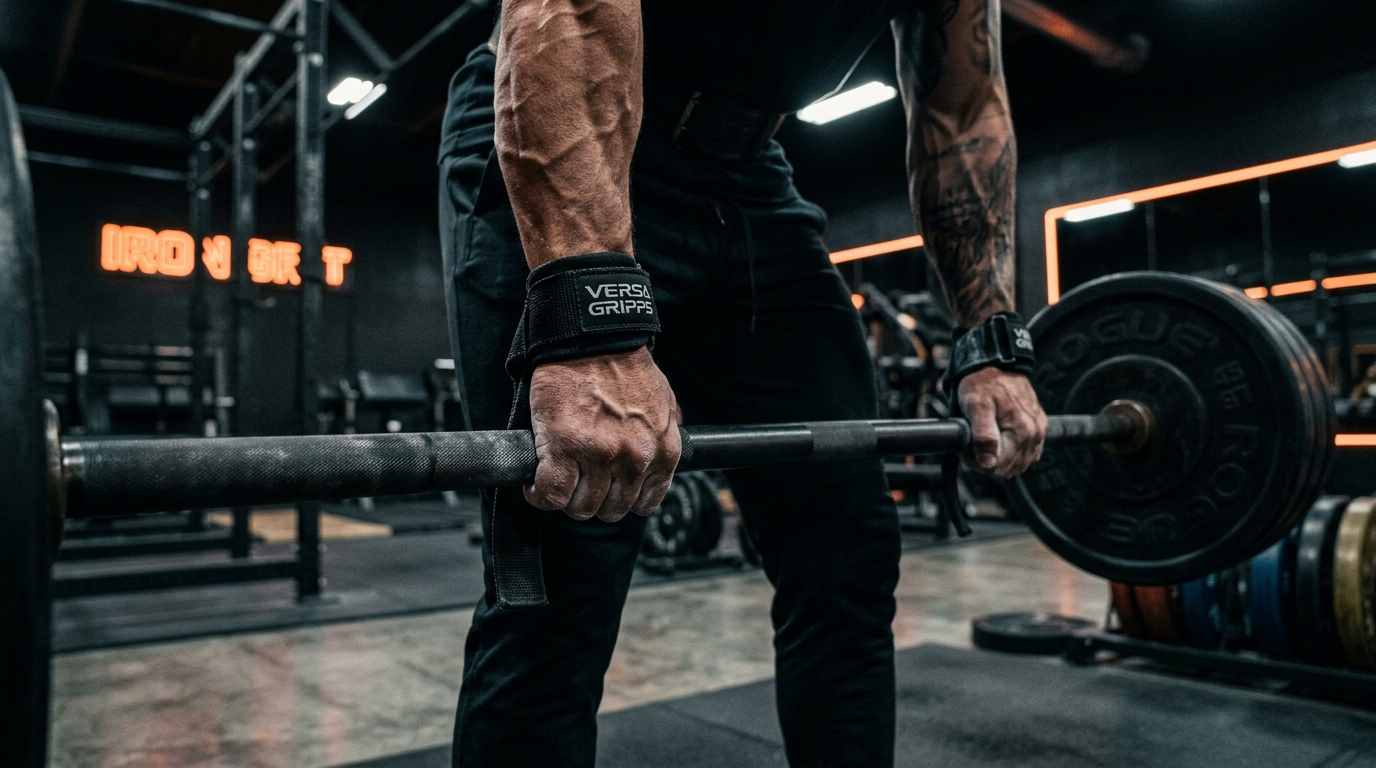
The deadlift is perhaps the most immediate beneficiary of superior grip strength. Without the ability to maintain a secure hold on the bar, all the power generated by your glutes, hamstrings, and back is rendered futile. Lifters often resort to mixed grip too early, developing muscular imbalances, or relying on straps, which, while useful for specific applications like volume work, can hinder the development of intrinsic grip strength. A weak grip forces the lifter to either cut sets short, compromise form (e.g., rounded upper back in an attempt to shorten the pulling distance), or limit the load, directly impairing **progressive overload** and the long-term potential for strength gains and **hypertrophy**.
Mastering grips like the double overhand and hook grip is paramount. The hook grip, as demonstrated and emphasized by elite powerlifters and strongmen, involves tucking your thumb under your fingers, creating a mechanical lock that dramatically increases security. However, it requires specific training to tolerate the discomfort. For those looking to master the deadlift, I highly recommend reviewing Jeff Nippard's comprehensive guide, which underscores the technical aspects including the often-overlooked role of a secure grip:
The Bench Press: Unlocking Chest and Triceps Power
While less intuitive, grip strength profoundly impacts the bench press. The cue "crush the bar" isn't merely to activate forearms; it’s a global tension generator. A firm grip activates the small muscles of the hand and forearm, which then radiate tension up the arm into the shoulder girdle. This tension aids in **shoulder packing** – keeping the shoulders retracted and depressed – which is crucial for stability, injury prevention (e.g., protecting the **rotator cuff**), and maximizing the leverage of the chest and triceps. Without a strong grip, the bar can feel unstable, leading to compensatory movements, energy leaks, and reduced force transfer from the prime movers.
By enhancing your grip, you implicitly improve **proprioception** around the shoulder joint, making your bench press feel more controlled and powerful. This can allow for heavier loads and more effective stimulation of the pectoral muscles and triceps. Consider the insights from coaches like Jeff Cavaliere from Athlean-X on shoulder health and performance; a stable base initiated by grip is foundational.
The Squat: The Unseen Pillar of Core Stability
For many, grip seems irrelevant to the squat. However, it plays a critical role in establishing a stable "shelf" for the barbell and maintaining upper back rigidity. When you actively pull the barbell into your upper back with a tight grip (as opposed to passively resting it), you engage your **lats** and upper back muscles. This engagement creates a more rigid torso, preventing the bar from rolling and enhancing **spinal rigidity**. This increased core stability, often referred to as intra-abdominal pressure, is paramount for safely and powerfully executing a squat. Without it, the lifter is prone to upper back rounding or losing control of the bar, compromising both safety and performance. A tight grip also helps to cue the external rotation of the shoulders, further engaging the lats and improving the overall stability of the upper body.
Specialized Grip Tools: The Arsenal for Ascendant Strength
Beyond the standard barbell, a suite of specialized tools exists to isolate and strengthen various aspects of grip, translating into tangible improvements across your entire training spectrum. These are not mere novelties but scientifically-backed implements designed to exploit distinct physiological pathways.
Fat Grips and Thick Bar Training
**Mechanism:** Increasing the diameter of the bar or dumbbell handle (e.g., using **Fat Gripz** or a **Rogue Axle Bar**) forces greater activation of the hands and forearms. A thicker implement distributes pressure over a larger surface area, demanding more muscle fibers to be recruited, particularly in the **extensor carpi radialis**, **flexor carpi ulnaris**, and the deeper flexor muscles of the forearm. This enhanced recruitment leads to greater **time under tension** for these muscles, promoting **hypertrophy** and strength gains.
**Application:** Integrate these into accessory lifts like dumbbell rows, bicep curls, overhead presses, and even pull-ups. For example, performing a set of bent-over rows with a **Rogue Axle Bar** will dramatically challenge your grip, forcing your lats to work harder to maintain stability. For direct grip work, farmers' carries with a thick bar or Fat Gripz are unparalleled for developing dynamic and static grip strength.
Plate-Loaded Grippers and Pinch Grips
**Mechanism:** Tools like the **Rogue Plate Load Pin** or **IronMind Hub** target pinch strength – the ability to hold objects between the thumb and fingers without involving the palm. This primarily strengthens the **abductor pollicis brevis**, **flexor pollicis brevis**, and **opponens pollicis**, crucial for stabilizing heavy implements and improving thumb dexterity. Plate pinch holds involve holding two or more weight plates together with your fingers, developing incredible **isometric strength** in the thumb and fingers.
**Application:** Ideal for dedicated grip sessions. Perform timed holds (e.g., 10-30 seconds) with increasing weight for plate pinches. The **IronMind Hub**, for instance, can be loaded with Olympic plates, allowing for progressive overload in pinch grip training. These are highly specific and directly transfer to heavy deadlifts and carries where a strong pinch is paramount.
Hand Grippers (e.g., IronMind Captains of Crush)
**Mechanism:** These spring-loaded devices are designed for developing crushing strength – the power to squeeze objects. They target the entire suite of finger flexors and forearm muscles with progressive resistance, similar to barbell training. **IronMind Captains of Crush** are renowned for their meticulous calibration and challenging increments.
**Application:** Use these for focused grip training at the end of a workout or on an active recovery day. Work through various rep ranges (e.g., low reps for maximal strength, higher reps for endurance). Consistency is key here, treating it like any other strength progression.
Towel/Rope Training
**Mechanism:** Incorporating towels (e.g., draped over a pull-up bar) or ropes (e.g., a **Rogue Climbing Rope**) introduces an unstable, dynamic element to grip training. This instability forces the smaller stabilizing muscles of the hand and forearm to work harder to maintain control, improving **grip endurance** and ability to resist **shear forces**. This type of training significantly enhances forearm muscle recruitment and works the hand in a more natural, variable manner.
**Application:** Excellent for pull-ups, chin-ups, and various types of rows. Towel pull-ups, for example, are a phenomenal way to build both grip and upper back strength. Rope climbs, if accessible, are the gold standard for full-body grip and pulling power. Even using towel grips attached to cables for rows or bicep curls can provide a unique stimulus.
Finger Strengtheners and Extensors
**Mechanism:** Often overlooked, balancing the strength of the finger flexors with the extensors is critical for hand health, injury prevention (e.g., **golfer's elbow** and **tennis elbow**), and overall grip longevity. Tools like the **Theraband Flexbar** for wrist and forearm exercises or dedicated finger extensors help strengthen the muscles responsible for opening your hand and extending your fingers, which is vital for preventing imbalances and fostering recovery.
**Application:** Integrate these into warm-ups, cool-downs, or rehabilitation protocols. Simple exercises like rubber band finger extensions or pronation/supination drills with a Flexbar can make a significant difference in hand and wrist resilience.
Integrating Grip Training: Protocols for Peak Performance
Strategic integration is paramount to avoid overtraining while maximizing benefits. Grip muscles are resilient but can be fatigued, impacting your main lifts if not managed correctly. The goal is to build a robust foundation without compromising primary workout objectives.
| Training Day Focus | Grip Integration Strategy & Tools | Targeted Grip Aspect |
|---|---|---|
| Lower Body (Squat Focus) |
|
Static/Crushing Grip, Core Stability |
| Upper Body (Bench Focus) |
|
Crushing Grip, Pinch Strength, Forearm Hypertrophy |
| Pull Day (Deadlift/Rows Focus) |
|
Dynamic Grip, Grip Endurance, Static Grip |
| Active Recovery / Off Day |
|
Balance, Endurance, Recovery |
Remember the principles of **progressive overload**: gradually increase the resistance, duration, or frequency of your grip training. For hypertrophy, aim for higher volume and **time under tension**. For strength, focus on heavier loads and lower reps. Always prioritize form over ego. Dr. Mike Israetel, a leading voice in **hypertrophy** research, consistently emphasizes that consistent, progressive overload is the bedrock of muscle growth, and grip is no exception to this fundamental principle.
The Neurological Cascade: Beyond Brute Force
The benefits of enhanced grip extend far beyond simply holding onto more weight. It initiates a profound neurological cascade that optimizes your entire lifting experience. A stronger grip communicates greater control to your CNS, allowing for more efficient **motor unit recruitment** in your prime movers. This means that with a secure grip, your body is less likely to hold back, permitting your lats, pecs, quads, and hamstrings to fire more powerfully.
Consider Jeremy Ethier's detailed explanations of **lat activation** during pulling movements. A strong, stable grip facilitates greater connection to the lats, allowing for better engagement and reduced reliance on the biceps or other secondary muscles. This translates to more effective muscle stimulus and growth.
Furthermore, a robust grip enhances **proprioceptive feedback**, improving your body's awareness in space and its ability to respond to external forces. This heightened awareness contributes to better technique, reduced risk of injury, and an overall more "locked-in" feeling during your lifts. Dr. Andrew Huberman, a neuroscientist, often speaks on the importance of the mind-body connection and the neural feedback loops that govern motor control; grip strength acts as a crucial input in this complex system.
Conclusion: Embrace the Gravity Grip, Unlock Your Potential
The journey to optimal strength is one of meticulous attention to detail, and no detail is too small to overlook if it serves to unlock your full potential. Grip strength, often dismissed as an afterthought, is in reality a foundational pillar of human performance. It is the silent, unsung hero that enables greater loads, enhances stability, and orchestrates a neurological symphony allowing your major muscle groups to perform at their absolute peak.
By consciously integrating specialized grip tools – from **Fat Gripz** and **Rogue Axle Bars** to **IronMind Captains of Crush** and dedicated pinch grippers – into your regimen, you are not merely strengthening your forearms. You are systematically dismantling a critical bottleneck in your **kinetic chain**, sending powerful signals of stability and control to your CNS, and ultimately unlocking **latent strength** across every major lift. This holistic approach, grounded in scientific principles and reinforced by practical application, will not only make you stronger but also more resilient, more athletic, and more capable of dominating the gravity that constantly challenges us. Embrace the Gravity Grip, and feel the profound difference it makes in every rep, every set, and every personal best.