The Unstable Advantage: Forge Unseen Strength
Beyond power and hypertrophy: Discover how specialized proprioception tools elevate joint stability, neuromuscular control, and injury resilience for peak, sustainable performance.
In the relentless pursuit of peak physical performance, the discourse often converges on familiar pillars: the brute force of **powerlifting**, the aesthetic sculpting of **hypertrophy**, and the cardiovascular endurance of **aerobic capacity**. While undeniably critical components of a comprehensive fitness regimen, an often-underestimated dimension of athletic prowess lurks beneath the surface, operating at a micro-level of neural command and muscular orchestration. This realm is the domain of **proprioception**, **neuromuscular control**, and intrinsic joint stability – the unseen architecture that underpins all movement, power, and resilience. As Dr. Kaelen Thorne, my clinical and research experience underscores, neglecting this foundational layer can render even the most formidable strength fragile, prone to injury, and ultimately unsustainable.
This article delves into the sophisticated science behind this 'unseen strength' and, more importantly, illuminates how specialized proprioception tools can be strategically integrated into your training paradigm to forge a more robust, injury-resistant, and ultimately higher-performing physique. We will transcend the conventional wisdom that solely measures success in kilograms lifted or inches gained, exploring how a targeted focus on the **sensory-motor system** can unlock untapped potential, enhance movement efficiency, and safeguard your athletic longevity.
The Biomechanical Bedrock: Proprioception and Neuromuscular Control
At the core of dynamic stability and efficient movement lies the intricate dance between our nervous system and musculoskeletal apparatus. **Proprioception** is our body’s sixth sense – the unconscious perception of movement and spatial orientation, derived from stimuli within the body itself. It’s how you know where your limbs are in space without looking, how you can navigate uneven terrain, or adjust your balance during a complex lift. This sophisticated sensory input is gathered by specialized mechanoreceptors embedded in muscles (muscle spindles), tendons (Golgi tendon organs), and joint capsules. These receptors constantly relay information regarding muscle length, tension, joint position, and movement velocity back to the central nervous system (CNS).
Building upon this sensory foundation is **neuromuscular control**, which refers to the efferent response to afferent proprioceptive signals. It's the ability of the CNS to interpret these sensory inputs and then coordinate appropriate muscle actions – activating agonists, antagonists, and synergists in the correct sequence, intensity, and timing – to produce desired movements and maintain stability. When you stand on an unstable surface, your brain receives a cascade of unpredictable sensory information, prompting rapid, micro-adjustments in muscle activation to prevent a fall. This iterative feedback loop is crucial not just for balance, but for the precise execution of any athletic maneuver, from a meticulously performed squat to an explosive plyometric jump.
"True strength isn't just about how much weight you can move; it's about the precision with which your body navigates complex sensory landscapes, adapting instantaneously to maintain equilibrium and execute tasks flawlessly. It's the silent dialogue between your brain and every muscle fiber." – Dr. Kaelen Thorne
Deficiencies in proprioception and neuromuscular control are direct precursors to injury. A joint with compromised proprioceptive input (e.g., following an ankle sprain) will have a delayed or inadequate muscular response to sudden perturbations, significantly increasing the risk of re-injury. Conversely, enhancing these capabilities fortifies the intrinsic stability of joints, mitigates undue stress on passive structures like ligaments, and optimizes the kinetic chain for power transfer and efficiency. This emphasis on neural tuning is a critical adjunct to traditional **strength training**, ensuring that the hypertrophied muscle can be controlled and deployed with precision.
Unlocking Potential: Specialized Proprioception Tools
To deliberately challenge and refine the proprioceptive system, athletes can leverage a range of specialized tools designed to introduce controlled instability. These are not mere gimmicks but scientifically validated instruments for enhancing the body's internal feedback mechanisms and adaptive muscular responses.
Balance Boards and Wobble Boards
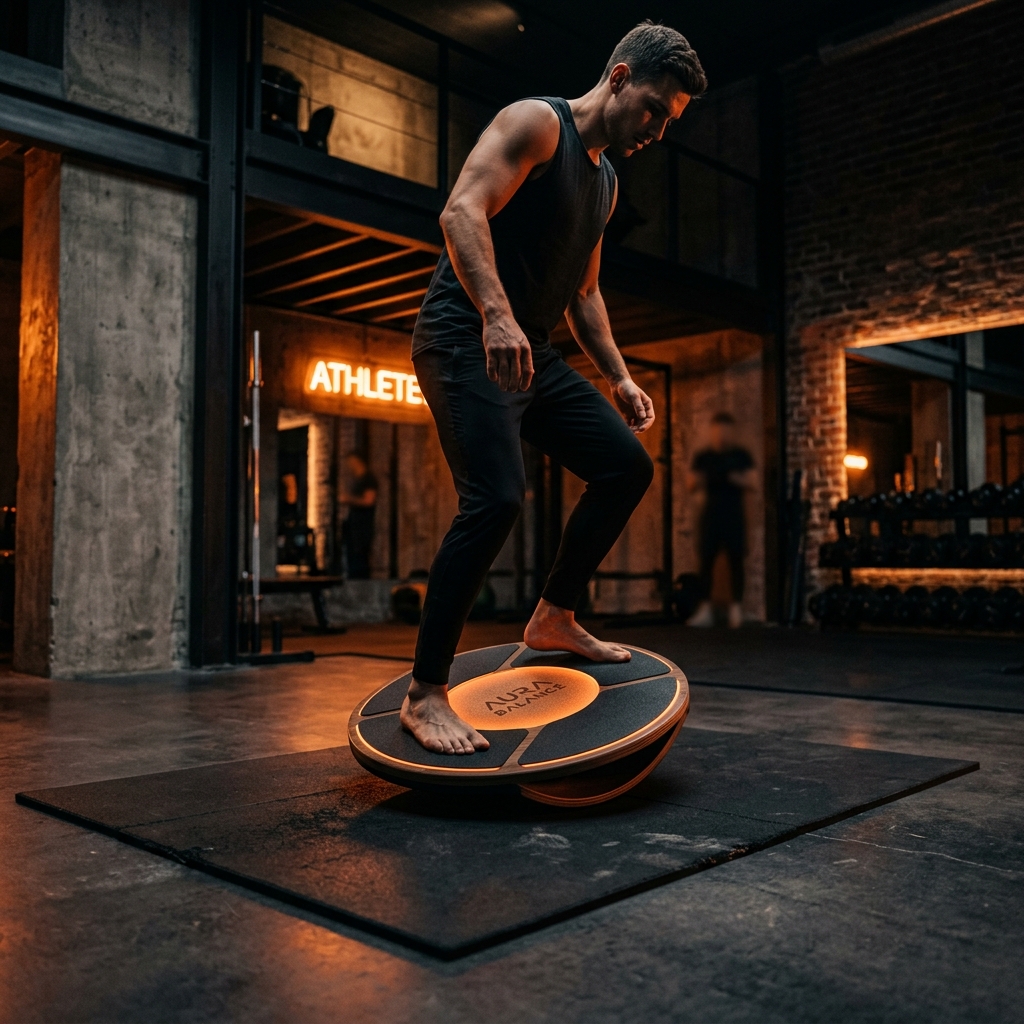
These devices, such as the **Indo Board** or **Fitterfirst Wobble Board**, present a dynamic, unstable surface that forces constant micro-adjustments. They are excellent for targeting ankle and knee joint stability, activating smaller stabilizing muscles around these joints, and improving overall kinetic chain awareness. Progressions can involve single-leg stands, squats, or even medicine ball tosses while maintaining balance.
BOSU Balance Trainer
The **BOSU Balance Trainer** (standing for "Both Sides Up") offers a versatile semi-sphere, allowing training on either the dome side or the flat platform side. It’s superb for engaging the core musculature, improving balance, and adding an unstable element to exercises like squats, lunges, push-ups, and planks. This tool effectively translates to better stability in multi-planar movements common in sports.
Stability Balls / Swiss Balls
A simple yet profoundly effective tool, the **TheraBand Exercise Ball** or **Gaiam Balance Ball** introduces a significant challenge to core stability and postural control. Exercises like stability ball planks, hamstring curls, pikes, or even sitting on the ball while performing upper body movements demand continuous activation of deep spinal stabilizers. This directly translates to better bracing during heavy compound lifts, as illuminated by experts like Jeff Nippard in his discussions on foundational strength mechanics.
In the context of a heavy squat, as demonstrated in Jeff Nippard's comprehensive guides, superior core stability fostered by stability ball training directly enhances the transfer of force and protects the lumbar spine.
Suspension Trainers
Tools like the **TRX Suspension Trainer** leverage bodyweight against gravity, but crucially, the instability of the straps adds a proprioceptive dimension. Every movement, from rows to chest presses to single-leg squats, becomes a full-body stability challenge. This not only builds strength but profoundly enhances core engagement and integrated kinetic chain stability, which is invaluable for athletes across all disciplines.
Resistance Bands
While primarily known for progressive resistance, bands like **TheraBand Resistance Bands** or **Rogue Monster Bands** can also be used to introduce instability. Anchoring a band to a stable point and performing rotational movements or lateral shuffles creates unpredictable resistance vectors, forcing rapid **neuromuscular adaptation** and improving control in dynamic, multi-planar movements. They are also excellent for activating smaller stabilizer muscles around joints during warm-ups.
Specialized Footwear
The choice of footwear significantly impacts proprioceptive input from the ground up. Minimalist shoes, such as **Vivobarefoot** or **Merrell Vapor Glove**, promote natural foot mechanics and enhance sensory feedback from the sole of the foot, which can improve balance and gait. Conversely, specialized weightlifting shoes like the **Adidas Adipower** or **Nike Romaleos** offer a stable, elevated heel and rigid sole to optimize biomechanics for heavy lifts, but for general stability training, less supportive footwear or even barefoot training can be beneficial to stimulate foot intrinsic muscles and proprioceptors directly. The key is understanding the specific training goal; for pure maximal force production, a stable base is paramount, while for proprioceptive development, challenging that stability is desired.
Beyond the Obvious: The Multifaceted Benefits
The integration of unstable training extends its benefits far beyond merely improving balance. It represents a sophisticated strategy for holistic athletic development.
Enhanced Joint Stability and Injury Resilience
Perhaps the most compelling argument for unstable training is its profound impact on injury prevention. By consistently challenging the **sensory-motor system**, we train the deep, intrinsic stabilizing muscles and improve the reflex arcs that protect joints. This translates into a reduced risk of common athletic injuries such as ankle sprains, knee ligament tears (e.g., ACL), and shoulder instabilities. The body learns to react faster and more effectively to unexpected forces, effectively "pre-habbing" itself against future trauma. This proactive approach to injury resilience is a cornerstone of sustainable, long-term athletic careers, a principle often echoed by experts like Jeff Cavaliere from Athlean-X in his discussions on shoulder health and injury prevention.
As Jeff Cavaliere illustrates, the shoulder is a prime example of a joint that thrives on comprehensive stability training, moving beyond mere strength to address the complex interplay of muscles and ligaments that maintain its integrity.
Optimized Movement Patterns and Biomechanical Efficiency
Improved proprioception leads to a more refined sense of body position, enabling athletes to execute complex movements with greater precision and efficiency. This means better form during compound lifts, leading to greater muscle activation in target areas and reduced compensatory movements that can lead to imbalances or injury. For sports-specific movements, this translates to sharper cuts, more powerful changes of direction, and more controlled landings, directly enhancing on-field or on-court performance.
Integrated Core Strength
Nearly all exercises performed on unstable surfaces inherently demand significant activation of the core musculature. The body's central pillar, comprising the rectus abdominis, obliques, transverse abdominis, and multifidus, works synergistically to stabilize the spine and transfer force between the upper and lower body. Unstable training ensures that this core strength is not merely static but dynamically responsive, translating into better bracing for heavy lifts and greater power transmission in athletic movements. This is critical for achieving the kind of progressive overload needed for **hypertrophy** and strength gains, as emphasized by Dr. Mike Israetel’s teachings on effective training principles.
While Dr. Israetel focuses on the direct drivers of muscle growth, the underlying stability gained from proprioceptive work provides a safer and more efficient platform for applying those hypertrophic stimuli.
Strategic Integration: Weaving Unstable Training into Your Regimen
The key to harnessing the unstable advantage lies in intelligent program design. Unstable training should complement, not replace, foundational **strength training** with heavy, compound movements. It is an accessory, albeit a crucial one, for refining the nervous system and supporting robust physical expression.
Progressive Overload in Proprioception
Just like traditional strength training, proprioceptive training benefits from **progressive overload**. This can involve:
- Increasing the duration an exercise is held on an unstable surface.
- Decreasing the base of support (e.g., two feet to one foot).
- Introducing external perturbations (e.g., a partner gently pushing you, or performing medicine ball tosses).
- Adding dynamic movements (e.g., squats on a BOSU ball versus static holds).
- Closing the eyes to remove visual input, forcing greater reliance on proprioceptors.
Sample Integration Protocol
Here's an example of how one might integrate specialized proprioception work into a weekly routine. This is not exhaustive but provides a framework for understanding the application.
| Training Phase | Recommended Unstable Training Elements |
|---|---|
| Warm-up (5-10 minutes) |
|
| Accessory Work (Post-Main Lifts, 10-15 minutes) |
|
| Dedicated Stability Session (1-2x per week, 20-30 minutes) |
|
This type of integrated approach is also highly beneficial for active recovery and neural recalibration, aligning with principles discussed by Dr. Andrew Huberman regarding optimizing nervous system function for recovery and performance.
Dr. Huberman’s insights into nervous system optimization highlight how targeted training can enhance not only strength but also the underlying neural pathways that govern movement and recovery, making stability work a powerful tool.
The Unseen Advantage: A Holistic Perspective
In the grand tapestry of human performance, every thread matters. While the pursuit of maximal strength and muscle mass remains a cornerstone for many, the truly elite athlete understands that sustained, peak performance requires a more holistic approach. It demands attention to the silent, unseen forces that dictate how effectively that strength is generated, controlled, and protected.
By embracing specialized proprioception tools and consciously developing **neuromuscular control**, you are not simply adding another layer to your training; you are fortifying the very foundation of your physical capabilities. You are training your body's intrinsic intelligence, enabling it to navigate the unpredictable demands of sport and life with greater precision, resilience, and confidence.
The "Unstable Advantage" is not about abandoning the weights or forsaking the pursuit of **hypertrophy**. Instead, it's about making those pursuits safer, more efficient, and ultimately more impactful. It's about building a body that doesn't just look strong, but is fundamentally, intelligently strong from the inside out. Forge this unseen strength, and you will unlock a new echelon of sustainable, high-level performance that few ever achieve.