VBT Unleashed: The Science of Speed for Superior Strength
Move beyond arbitrary percentages. Discover how real-time velocity tracking revolutionizes progressive overload, optimizes training intensity, and predicts fatigue.
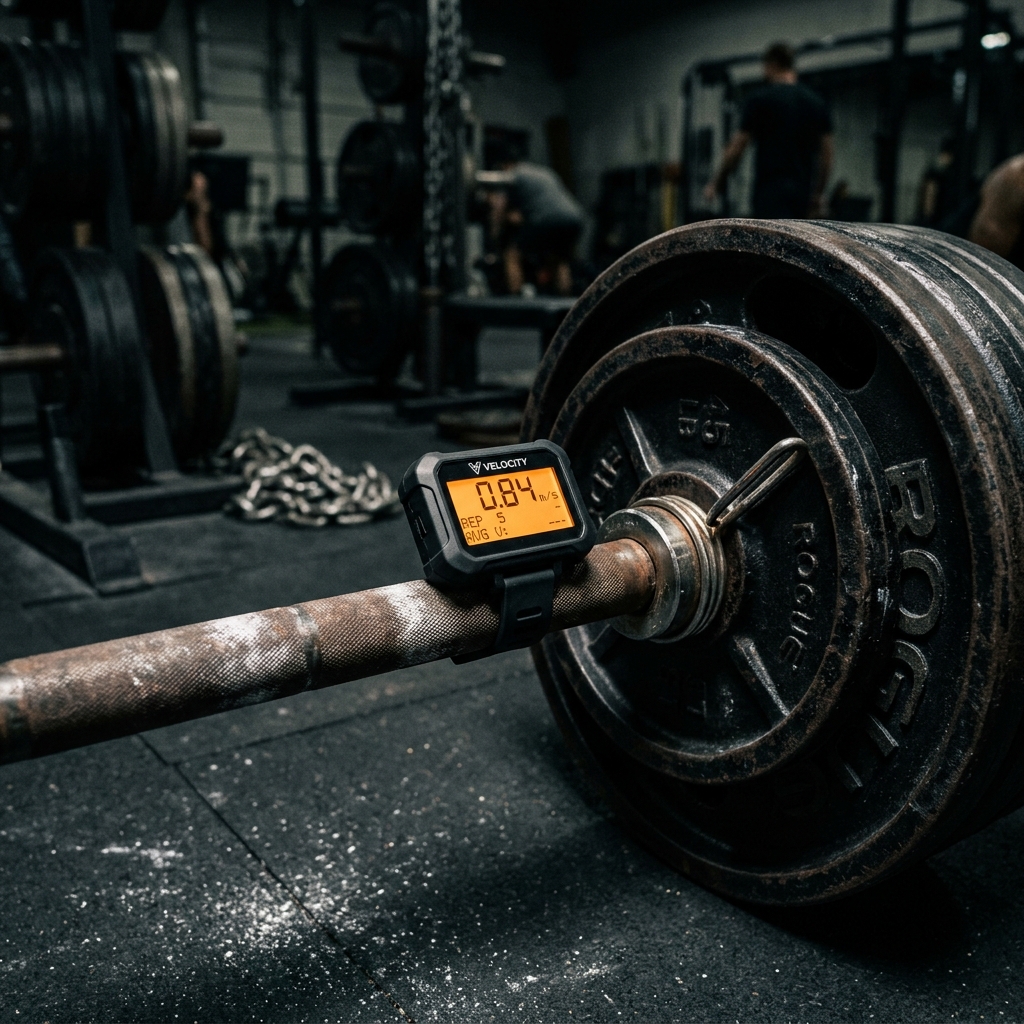
In the intricate symphony of human movement and athletic endeavor, the pursuit of superior strength has long been governed by a seemingly immutable dogma: percentage-based training. For decades, athletes and coaches alike have relied on arbitrary percentages of a one-repetition maximum (1RM) to dictate training intensity, a method fraught with inherent limitations. While foundational, this approach often overlooks the dynamic, fluctuating physiological state of the individual. Enter Velocity-Based Training (VBT) – a paradigm shift poised to revolutionize how we approach **progressive overload**, optimize training intensity, and even predict fatigue. This article delves deep into the scientific underpinnings of VBT, demonstrating how real-time velocity tracking offers an unprecedented level of precision, transforming guesswork into granular, data-driven performance enhancement.
The Limitations of Legacy: Why %1RM Falls Short
Traditional percentage-based training, while a cornerstone of periodization, operates on a significant assumption: that an athlete's 1RM is a static, reliable benchmark day in and day out. In reality, an athlete's maximal strength can fluctuate by as much as 10-20% on any given day due to myriad factors: sleep quality, nutritional status, cumulative fatigue, psychological stress, and even circadian rhythms. A 75% 1RM calculated on a "fresh" day might feel like 85% on a "fatigued" day, leading to suboptimal training outcomes.
"Reliance on static percentage-based training often leads to either undertraining on high-readiness days, leaving performance gains on the table, or overtraining on low-readiness days, increasing injury risk and hindering recovery. VBT acts as a real-time, objective arbiter of daily capacity."
This inherent variability means that a prescribed load, intended to elicit a specific physiological response, might miss its mark entirely. The result? Inconsistent training stimuli, slower progress, increased risk of injury, and a general disconnect between programming intent and actual execution. This is where VBT, by introducing an objective, real-time metric, bridges the gap, allowing for true **autoregulation** and precision in every repetition.
VBT Decoded: The Science of Speed
Velocity-Based Training fundamentally shifts the focus from external load alone to the speed at which that load is moved. It recognizes that for any given exercise, a specific percentage of 1RM correlates to a relatively consistent **mean concentric velocity (MCV)** or **peak concentric velocity (PCV)**. This relationship, often depicted as the load-velocity profile, is remarkably stable across individuals and exercises. By measuring the velocity of the barbell (or bodyweight movement) in real-time using devices such as linear position transducers (e.g., **GymAware FLEX**, **Vitruve Encoder**) or accelerometer-based sensors (e.g., **RepOne STRENGTH**), VBT provides immediate, actionable feedback.
Key Metrics in VBT:
While various velocity metrics exist, two are predominantly used:
- Mean Concentric Velocity (MCV): The average speed of the barbell during the concentric (lifting) phase of the movement. This is generally considered a more reliable indicator for tracking strength and fatigue due to its less volatile nature compared to peak velocity.
- Peak Concentric Velocity (PCV): The highest speed achieved during the concentric phase. Often more relevant for highly ballistic movements or assessing explosive power.
The underlying physiological principle is simple yet profound: as fatigue accumulates, or as relative intensity increases, the velocity at which a given load can be moved decreases. Conversely, on days of high readiness, a given load can be moved faster. VBT leverages this immutable physiological reality to optimize training stimuli.
Optimizing Training Intensity and Adaptation Zones
One of VBT's most compelling applications is its ability to precisely target specific physiological adaptations by defining velocity zones. Instead of aiming for a vague "strength" or "hypertrophy" percentage, VBT provides objective velocity ranges known to elicit these adaptations.
Velocity Zones for Targeted Adaptations:
| Training Goal | Mean Concentric Velocity (MCV) Range (m/s) | Physiological Emphasis |
|---|---|---|
| Absolute Strength | 0.10 - 0.50 m/s | Maximal motor unit recruitment, inter/intramuscular coordination, neural drive. |
| Strength-Speed | 0.50 - 0.75 m/s | Transition zone, emphasizing rate of force development (RFD) with heavier loads. |
| Hypertrophy | 0.30 - 0.75 m/s (typically 0.45-0.75 m/s for effective tension) | Sustained mechanical tension, metabolic stress, time under tension. As Dr. Mike Israetel highlights, volume and proximity to failure are paramount for muscle growth. |
| Power (Speed-Strength) | 0.75 - 1.00 m/s | Explosive force production against moderate loads, enhancing neural potentiation. |
| Speed/Ballistic Power | > 1.00 m/s | Maximal acceleration, uninhibited movement, often lighter loads or bodyweight. |
By setting a target velocity range for a given exercise, an athlete can ensure that every set and repetition contributes optimally to the desired adaptation. If the velocity drops below the target range, the load might be too heavy for the day's readiness, or fatigue is setting in, signaling a need to adjust.
The Minimum Velocity Threshold (MVT) and Proximity to Failure:
One of the most powerful applications of VBT is its ability to objectively quantify proximity to failure. For most multi-joint compound exercises, there's a relatively consistent **minimum velocity threshold (MVT)** – the slowest speed at which a repetition can be completed before absolute concentric failure. This MVT typically hovers around 0.15-0.20 m/s for exercises like the squat, bench press, and deadlift.
Instead of guessing "Reps in Reserve (RIR)," VBT provides an objective metric. If an athlete's target is 2 RIR, they stop the set when their MCV approaches approximately 0.25-0.30 m/s for a squat. This prevents both premature termination of a set and pushing too far into muscular failure, which can accumulate excessive fatigue without necessarily providing superior hypertrophic stimulus, as extensively discussed by experts like Dr. Mike Israetel regarding training intensity and volume for **hypertrophy**.
Predicting Fatigue and Enhancing Recovery
VBT extends beyond mere intensity optimization; it's an unparalleled tool for fatigue management and recovery.
Velocity Loss within a Set:
A critical VBT metric is **velocity loss** over the course of a set. The percentage drop in velocity from the fastest rep (usually the first or second) to the last rep is directly correlated with the degree of fatigue induced. For instance, a 10-20% velocity loss is typically associated with minimal fatigue, promoting recovery and technical efficiency, often suitable for power or technique work. A 20-40% velocity loss might be optimal for strength and hypertrophy, inducing sufficient stimulus without excessive central nervous system (CNS) fatigue. Anything above 40-50% velocity loss indicates significant fatigue, beneficial for specific overload phases but detrimental if accumulated excessively.
Monitoring velocity loss allows coaches and athletes to prescribe training doses precisely. Rather than simply prescribing "3 sets of 8," VBT allows for "3 sets until velocity drops by 20%," ensuring a consistent physiological stressor regardless of the day's readiness. This precision is crucial for managing the delicate balance between stimulus and recovery, a concept thoroughly explored by neuroscientists like Dr. Andrew Huberman when discussing the intricate relationship between effort, recovery, and neurological adaptation.
Daily Readiness and Autoregulation:
Performing a few warm-up repetitions with a submaximal load (e.g., 50-60% 1RM) at the beginning of each session can provide an immediate 'readiness score'. If the velocity for that load is higher than typical, the athlete is primed for a more intense session. If lower, it's a clear signal to deload or adjust targets to avoid overreaching. This intelligent **autoregulation** prevents unnecessary fatigue accumulation and ensures consistent, effective training.
Implementing VBT: Practical Applications & Gear
Integrating VBT into your training regimen requires both a conceptual shift and specific tools.
Essential VBT Gear:
To embark on a VBT journey, a reliable velocity tracking device is paramount. Brands like **GymAware** (known for their high precision and robust software), **Vitruve** (offering excellent value and ease of use), and **RepOne STRENGTH** (a versatile accelerometer-based option) provide excellent solutions for various budgets and needs. These devices typically attach to the barbell or rack and measure movement velocity in real-time, displaying feedback on a connected smartphone or tablet.
Beyond the VBT specific hardware, a high-quality training environment is crucial. For serious lifters, investing in a robust barbell like the **Rogue Fitness Ohio Bar** or the **Eleiko IWF Weightlifting Training Bar** ensures consistent bar path and reliable performance. Precision-calibrated plates, such as those from **IronMind** or **Titan Fitness**, minimize load discrepancies. A sturdy bench, like the **Rogue AB-2 Adjustable Bench**, provides a stable platform for bench press.
Footwear also plays a critical role in force transmission. For stability in squats and deadlifts, Olympic weightlifting shoes like the **Adidas Adipower** or **Nike Romaleos** are ideal due to their elevated heel and rigid sole. For more versatile CrossFit-style training that blends lifting with dynamic movements, the **Nike Metcon** or **Reebok Nano** series offers excellent hybrid performance.
Lastly, while VBT focuses on training stimulus, supporting your body with quality nutrition is non-negotiable. Reputable supplement brands like **Optimum Nutrition Gold Standard 100% Whey** for protein, **Creatine Monohydrate** from brands like **Thorne Research**, and a comprehensive multivitamin such as **Garden of Life Mykind Organics** can support recovery and performance. As Dr. Layne Norton consistently emphasizes, nutrition and caloric balance are fundamental to any training success.
Exercise-Specific VBT Application:
Let's consider how VBT applies to the foundational lifts, using insights from renowned coaches like Jeff Nippard.
Squat:
For hypertrophy-focused squat training, an athlete might target a MCV range of 0.45-0.75 m/s, aiming for a 20-30% velocity loss per set. On a day of high readiness, they might lift 120 kg within this range, whereas on a fatigued day, they might only be able to hit 110 kg for the same velocity and velocity loss parameters. The VBT device objectively guides load selection, ensuring the intended stimulus is consistently delivered.
Bench Press:
For absolute strength in the bench press, the goal might be to work within the 0.10-0.50 m/s range with minimal velocity loss (e.g., 10-15%) across sets, prioritizing maximal force production with each repetition. This ensures high-quality reps and avoids accumulating excessive fatigue that could compromise technique or subsequent sets.
Deadlift:
Given the deadlift's high fatigue potential, VBT is invaluable. An athlete could use a target MCV for heavy singles (e.g., 0.20-0.30 m/s) and monitor velocity drop-offs between sets to determine when to conclude the session before risking overtraining. For comprehensive guidance on maximizing lifts and avoiding common pitfalls, resources from experts like Jeff Nippard are indispensable.
VBT and the Future of Progressive Overload
VBT redefines **progressive overload**. Instead of simply adding weight, progression can occur in multiple dimensions:
- Increasing load at the same velocity: Moving 105 kg at 0.6 m/s when you previously moved 100 kg at 0.6 m/s.
- Increasing velocity with the same load: Moving 100 kg at 0.7 m/s when you previously moved it at 0.6 m/s.
- Reducing velocity loss over a set: Completing a set with 15% velocity loss when previously it was 25% with the same load and reps.
This multi-faceted approach to progression provides a more granular and sustainable path to strength gains, continually challenging the neuromuscular system in a precisely controlled manner. It allows for a more nuanced understanding of adaptation, moving beyond simply chasing numbers to optimizing the quality of every single rep. Esteemed coaches like Greg Nuckols and Alan Aragon have consistently advocated for such data-driven approaches to training and nutrition, emphasizing that true progress is multifaceted.
Conclusion: Unleashing Your Full Potential with VBT
Velocity-Based Training is not just another fitness trend; it's a scientifically validated methodology that brings unparalleled precision to the art and science of strength training. By moving beyond the inherent limitations of arbitrary percentages and embracing real-time velocity tracking, athletes can unlock a new level of **autoregulation**, optimize training intensity for specific adaptations like **hypertrophy** and absolute strength, and master fatigue management.
"The future of strength training is intelligent, adaptive, and data-driven. VBT empowers every lifter to become their own best coach, responding to their body's signals in real-time to consistently maximize performance and minimize risk."
Whether you are an elite athlete seeking the slightest edge, a dedicated powerlifter striving for new personal bests, or a fitness enthusiast committed to sustainable, effective progress, incorporating VBT into your regimen will transform your approach to the barbell. Embrace the science of speed, and unleash a new era of superior strength.